


Two Easy Ways to Start Earning Rewards!
Become a member today! Members-only pricing and offers, personalized care notifications, Vital Care points back on every purchase and more!
 Become a credit card member today!
Earn 2X Pals Rewards points at Petco
when you use Petco Pay!APPLY NOWLearn More About Petco Pay Benefits
Skin & Coat


Cat Skin and Coat Shampoo
Medicated cat shampoo exists to help alleviate painful and unhealthy skin conditions for your cat. These can include yeast infections, allergies, dandruff, bacteria, fungal infections and more. Each of these afflictions is not only uncomfortable for your cat, but they can potentially represent serious health risks. Some can even spread to other pets in the house. Consult your veterinarian about your cat’s condition, and they might recommend a prescription medicated cat shampoo.
FAQs About Medicated Cat Shampoo
Different types of medicated cat shampoo are formulated to address different aspects of cat skin care.
Cat allergy shampoo can help alleviate allergy-related skin conditions, including overall redness, irritation and inflammation. It may also help decrease scratching and dandruff.
Antifungal shampoo for cats can address a host of skin conditions your cat may be experiencing, from ringworm to yeast and sporotrichosis. Ringworm is perhaps the most common of the three conditions. Despite the name, it’s a fungus and not a worm. It can lead to dandruff, skin irritation and hair loss. Prescription ringworm shampoo for cats can help alleviate the condition. Typically, it’s formulated with ketoconazole, which is an antifungal that works for many different types of infections. Ketoconazole for cats also comes in tablet form.
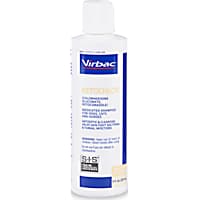
Ringworm is highly contagious to you and other animals that may live in your home. If you have dogs and cats living together, talk to your veterinarian about ketoconazole for dogs. You don’t want your cat infecting your dog or vice versa. Your vet might recommend managing possible ringworm outbreaks for both cats and dogs with Ketochlor medicated shampoo for dogs and cats.
Cat skin problems can originate from a variety of sources, oftentimes with similar symptoms, such as redness, irritation, scratching and dandruff.
In all cases, the best thing to do is to consult your veterinarian to have your cat diagnosed. Some conditions may be treatable with over-the-counter medications. Others might require prescription-strength medicated cat shampoo.
If it seems like your cat is itching and licking themselves more often than usual, it’s possible that they are experiencing some type of fungal or bacterial skin irritation. These can show up anywhere on the body but will be most common on the paws, wrists and areas behind their front and rear legs.
Giving your cat a bath with an over-the-counter medicated cat shampoo option may be effective, but it’s best to consult your veterinarian first. They can help diagnose the issue and make the most direct plan for treatment.
Dermatitis in cats can show up in many forms, from mild redness and skin irritation to painful, scabby and unsightly bumps all over your cat's body.
If you suspect your cat has a dermatitis outbreak, it’s highly suggested to consult your veterinarian. Skin conditions can take on many forms and result from many different sources. It takes the trained eye and experience of a veterinarian to properly diagnose the situation and offer the best course of treatment for your cat.