Two Easy Ways to Start Earning Rewards!
Earn 2X Pals Rewards points at Petco
when you use Petco Pay!
Get It Today
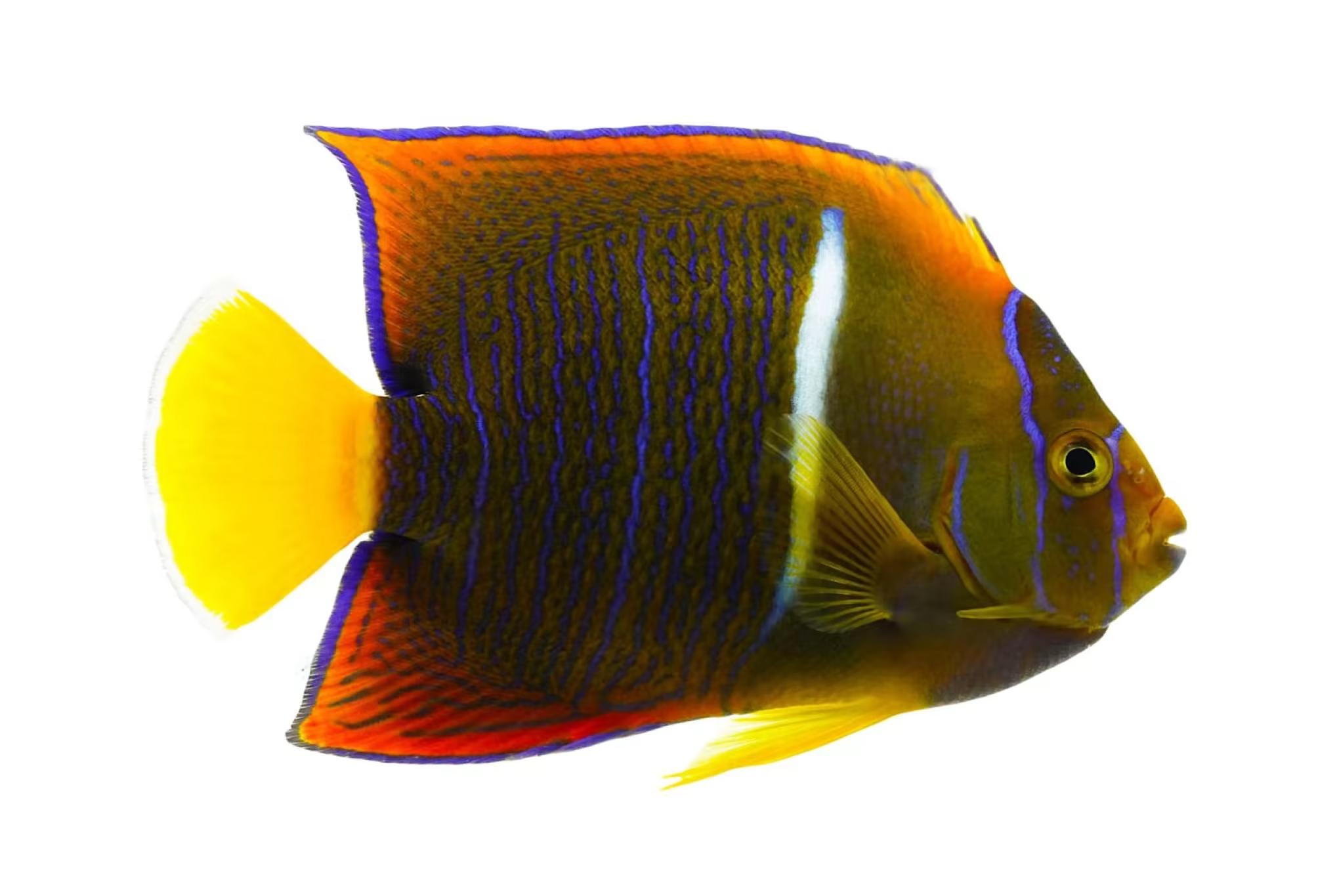
Learn how to care for large marine fish, recommended diet and habitat setup. Find the right food, supplies and equipment at your neighborhood Petco.
Updated on April 9th, 2026
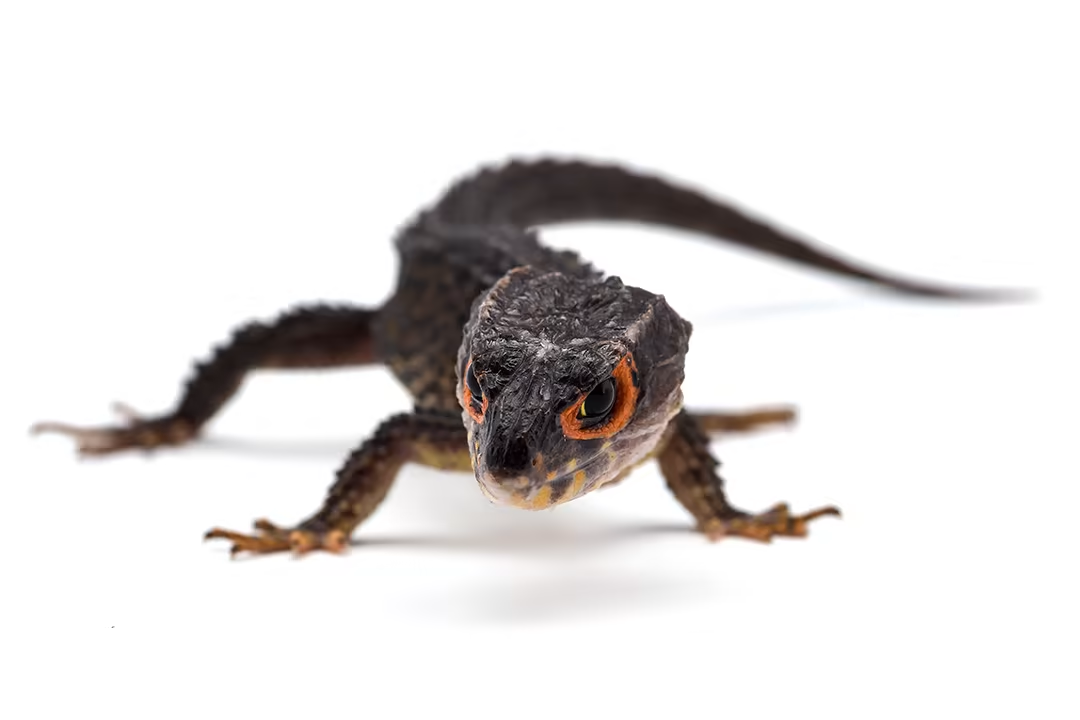
Learn how to care for Red-Eyed Crocodile Skink, recommended diet & aquarium setup. Find the right food, supplies & equipment at your neighborhood Petco.
Updated on April 9th, 2026
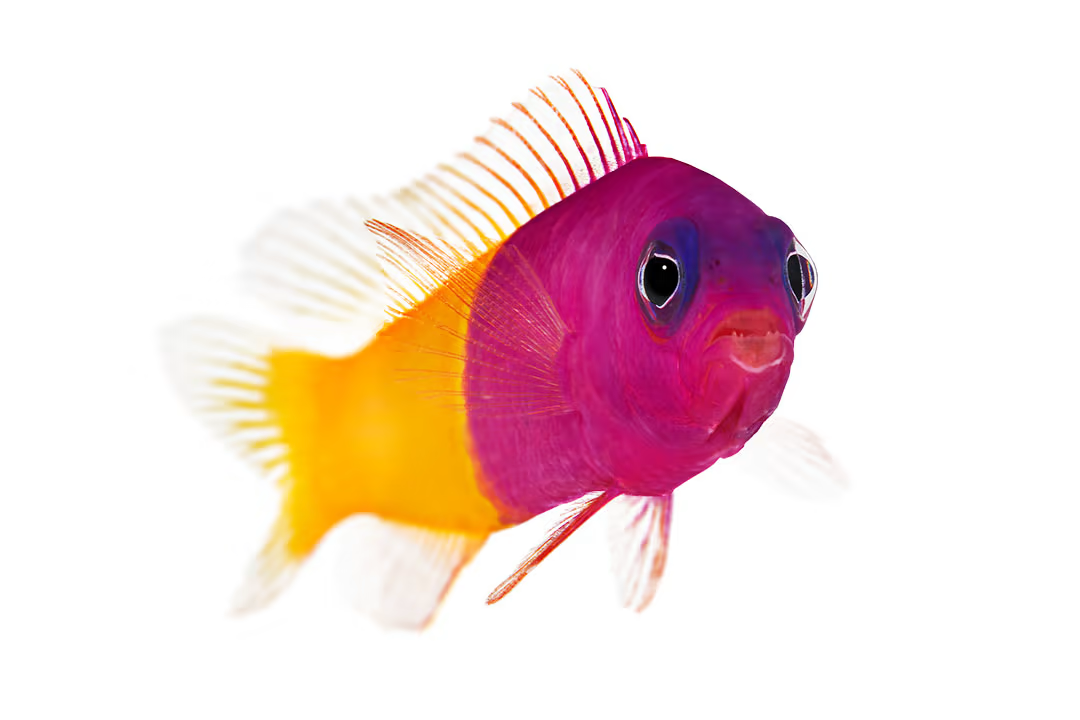
Small Marine Fish are favorites with marine aquarists and includes a wide range of species.
Updated on April 9th, 2026
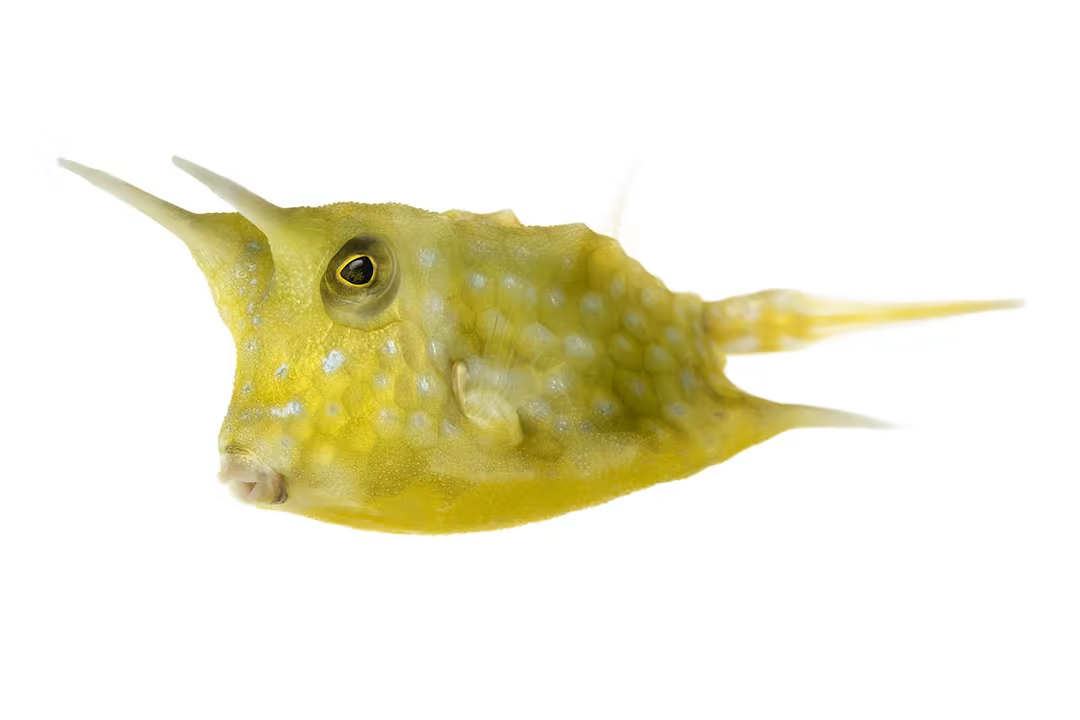
Learn how to care for Boxfish & Cowfish, recommended diet and aquarium setup. Find the right food, supplies and equipment at your neighborhood Petco.
Updated on April 9th, 2026
Learn how to pick the right aquarium plants, substrate, lighting, and fertilizers to ensure that your aquarium plants thrive and stay healthy.
Updated on July 17th, 2026
What you have appears to be an aquatic/semi-aquatic species of turtle. Basic requirements include a tank of at least 10 gallons initially, a water heater, a water filter, a basking area out of the water, a heat lamp and a UVB light source.
Updated on September 24th, 2025
Reptile water conditioner usually contains chemicals such as Water, Dechloraminating Agents, Synthetic Organic Polymers (Colloids), Chelating Agents, Electrolytes. The reptile conditioner usually also has a chemical that binds calcium in the water as well as a slime protecting agent that is good for amphibians and fish. Aquarium water conditioners (for fresh water fish) contains chemicals such as sulfates such as sodium thiosulfate. Thiosulfate is a Redox reducing agent. Either should be ok for reptiles or fish, however I would stick with reptile conditioner for reptile tanks or mixed (reptile and fish) tanks and for aquaria with fish only I would use specific aquarium water conditioner. The main reason to use a water conditioner is to remove chlorine in water. This, however, can also be attained by leaving the aquarium water fresh from the tap sitting over night. The chlorine will dissipate.
Updated on September 24th, 2025
Without anything to use for scale, it is hard for me to tell how big your tank is, but in general it seems very small. Also, the water that is in the tank appears very cloudy right now, so that would be the first place to start. Water quality is very important, and will make or break your ability to house and care for fish. I would recommend getting a good filter system (you can visit a local pet store to assist you with brands in your area, as I am not familiar with what you can get in India). Be sure to bring the measurements (height, length, width) of your tank, or the gallons or liters so they can tell you what capacity of filter you will need. Everything else will depend on what types of fish you get - if you plan on getting multiple fish, they will need to be small - a general rule of thumb is one square inch of fish per gallon of water. Depending on the species you get, you may need to also get a bubbler to ensure there is enough oxygen in the water for them, and you will also likely need to get some sort of substrate for the bottom and cage furniture (different species have different air requirements, and some are secretive and like to hide). You may also need a water heater, depending on the species you would like to house. But, depending on how small your tank is, it may be hard to get a water heater that will fit. The food type will also depend on what species you get, as there can be differences in diet type between species. I hope that gives you a place to start, and good luck!
Updated on September 24th, 2025

A proper diet for red-eared sliders includes a complete pellet, such as those made by ReptoMin, and dark leafy green vegetables. This can be fed once per day, and the amount should be based on how many pellets Cooper can eat in 5-7 minutes. This is just a guideline, and your veterinarian can help you to determine if this is appropriate based on Cooper's body condition score (i.e. whether she is overweight or not). For a heat lamp - photo 1 just looks like the dome, and there doesn't appear to be a bulb in it. The second lamp looks like it is a daytime only heat lamp - it is often beneficial to have a heat source that can be used during the day or at night, and if that is what you are looking for, I would recommend a ceramic heat bulb. If you are looking for only a daytime basking bulb, there are many brands that would be appropriate. The key words that you should look for are "daytime basking bulb." For watts - it depends on how far the bulb is away from your turtle - there are some brands that have a chart on the side of the box that will give you distances and temperatures that correlate with the distance. This information, combined with your desired temperature for the basking area will help you to decide on what wattage to get. I hope that gives you more information!
Updated on September 24th, 2025
Keep him warm and as stress free as possible. If he is on loose substrate, switch him to slate, paper towels or reptile carpeting to prevent material from sticking to his vent. Submit a stool sample to your veterinarian to diagnose intestinal parasites.
Updated on September 24th, 2025