Two Easy Ways to Start Earning Rewards!
Earn 2X Pals Rewards points at Petco
when you use Petco Pay!
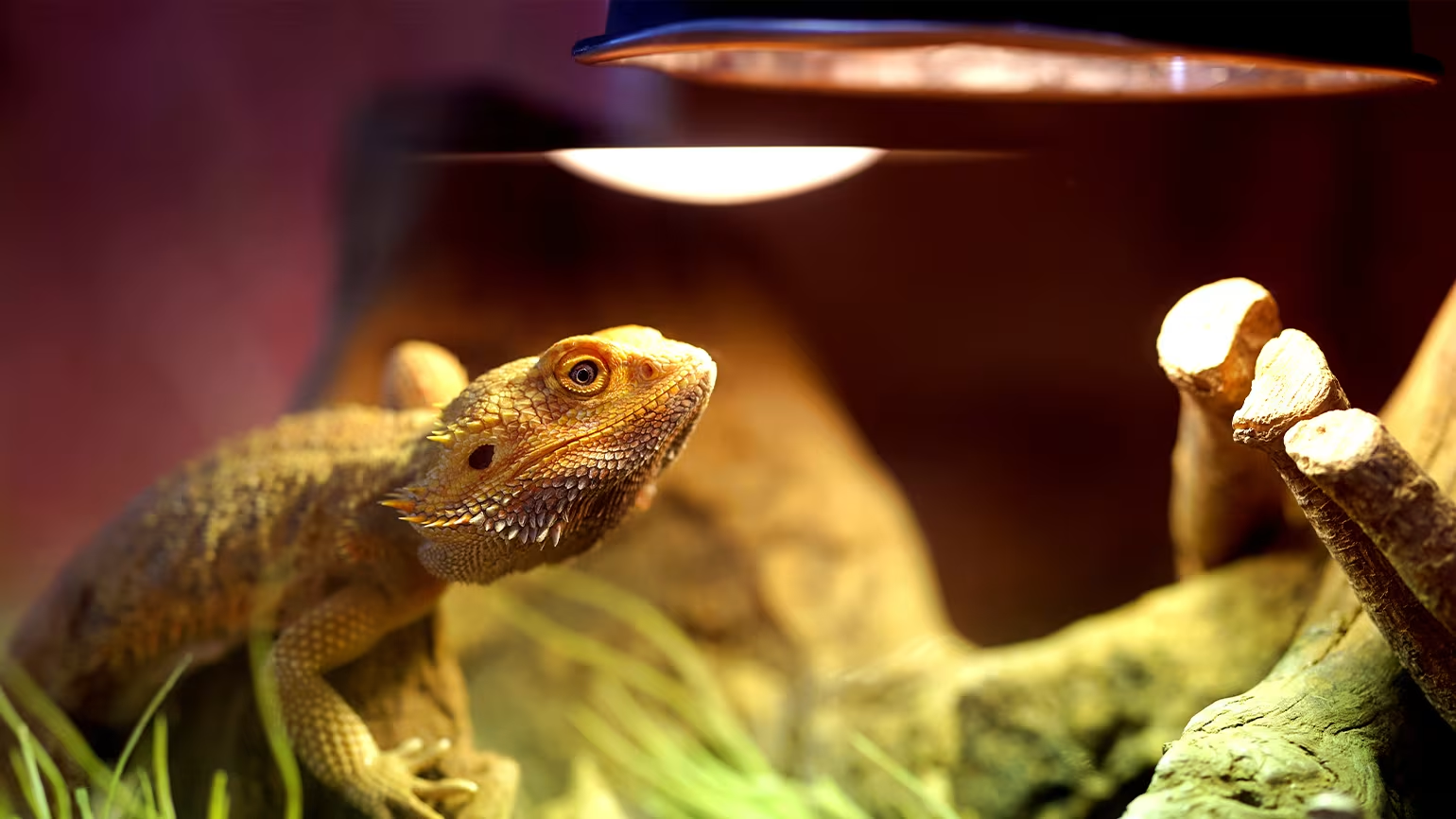
Learn the importance of UVB light for your reptiles and the right reptile lights for your pet’s habitat.
Updated on July 17th, 2026
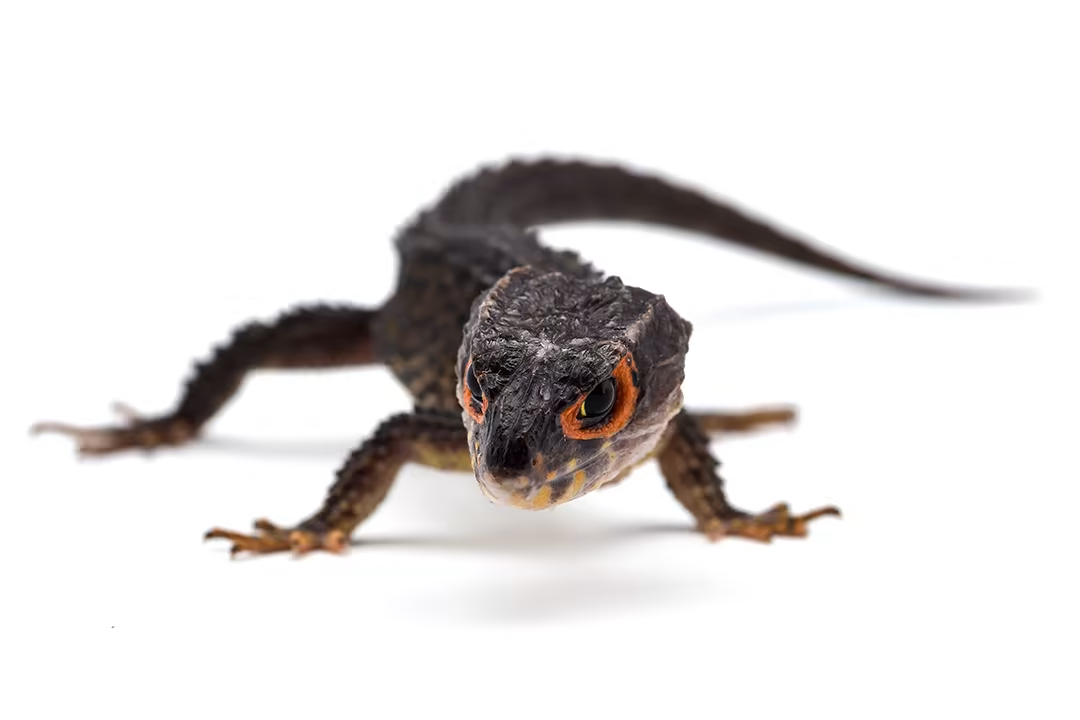
Learn how to care for Red-Eyed Crocodile Skink, recommended diet & aquarium setup. Find the right food, supplies & equipment at your neighborhood Petco.
Updated on April 9th, 2026
Regular cleaning and disinfecting of your pet's cage and accessories is one of the keys to keeping your reptile healthy. Learn how often you should clean your cage.
Updated on July 17th, 2026
Learn how to safely handle your aquatic life to avoid toxin & bacterial exposure. Find aquatic life care supplies at your neighborhood Petco pet care center.
Updated on October 23rd, 2025
Search Petco for treatment for scale rot on your reptile. We can help you make sure your pet is always happy and healthy.
Updated on July 17th, 2026
A proper diet for red-eared sliders includes a complete pellet, such as those made by ReptoMin, and dark leafy green vegetables. This can be fed once per day, and the amount should be based on how many pellets Cooper can eat in 5-7 minutes. This is just a guideline, and your veterinarian can help you to determine if this is appropriate based on Cooper's body condition score (i.e. whether she is overweight or not). For a heat lamp - photo 1 just looks like the dome, and there doesn't appear to be a bulb in it. The second lamp looks like it is a daytime only heat lamp - it is often beneficial to have a heat source that can be used during the day or at night, and if that is what you are looking for, I would recommend a ceramic heat bulb. If you are looking for only a daytime basking bulb, there are many brands that would be appropriate. The key words that you should look for are "daytime basking bulb." For watts - it depends on how far the bulb is away from your turtle - there are some brands that have a chart on the side of the box that will give you distances and temperatures that correlate with the distance. This information, combined with your desired temperature for the basking area will help you to decide on what wattage to get. I hope that gives you more information!
Updated on September 24th, 2025
Fluker's or Maxuri pellets/sticks are quality diets. The diet should be varied to maximize nutrition. Offer leafy greens, crickets, small feeder fish, krill/shrimp (either can be freeze dried) or superworms in addition to a commercial pelleted diet.
Updated on September 24th, 2025
Thanks for reaching out about Sanic and including photos. Several of the nationally renowned herpetological societies (Chicago, Arizona), have good online information on husbandry and diet. As medical advise, an initial visit with a veterinarian for a physical examination and fecal testing (at least) is recommended. Annual visits are also recommended as follow ups. Husbandry and nutrition are key starting points for long term health, just like in people. A well rounded diet with multiple components, is more likely to avoid vitamin and mineral deficiencies and excesses. As with any animal, exercise is important. Good luck.
Updated on September 24th, 2025
An acceptable substrate would be river rocks or large gravel. Anything smaller could potentially be ingested causing an impaction or obstruction. You could also leave the bottom bare. The basking area doesn't necessarily need substrate. A ramp out of the water leading to a simple platform is acceptable.
Updated on September 24th, 2025
Thanks for your question about Tarzan. The lack of activity that you are describing may be normal for Tarzan, but when you then combine it with her not shedding and not going to the bathroom very often I begin to suspect that there is something else going on. I would recommend feeding Tarzan a small salad of dark leafy greens on a daily basis, with calcium supplementation 2-3 times per week based on her age. I would also recommend protein 2 times per week based on her age as well. You eluded to having recommended temperatures in the cage, but I didn't see how you were monitoring the temperatures or if there was UVB light provided. I would recommend monitoring using a digital thermometer and changing the UVB light every 4-6 months. I am glad that she seemed to be doing okay at her vet visit in the fall. I didn't see if blood work was performed, but that is something that I recommend for every reptile at regular intervals for wellness examinations, as reptiles are very good at hiding their illnesses from their owners. I would also consider performing radiographs (x-rays) if these haven't been performed previously, as well as a fecal examination. I hope that gives you a place to start, and that Tarzan feels better soon.
Updated on September 24th, 2025