Two Easy Ways to Start Earning Rewards!
Become a member today! Members-only pricing and offers, personalized care notifications, Vital Care points back on every purchase and more!
 Become a credit card member today!
Earn 2X Pals Rewards points at Petco
when you use Petco Pay!APPLY NOWLearn More About Petco Pay Benefits
Sera Live Plants


Related Articles & Questions
- Care Sheets
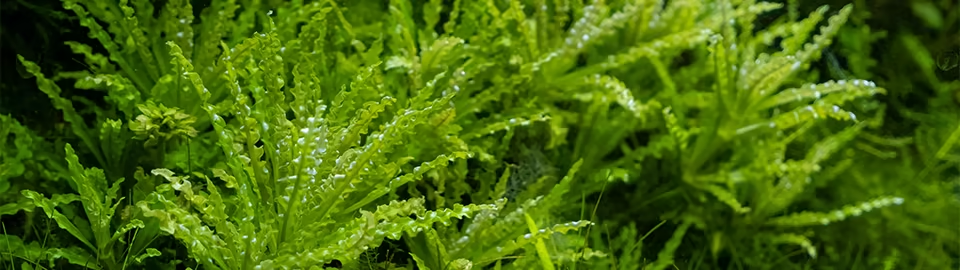
Pogostemon Helferi: How to Grow & Care for This Aquarium Plant
Shop Petco for Pogostemon Helferi aquarium plants. We want to help you select the best plant for your aquarium, as well as share tips on how to care for them.
Updated on October 23rd, 2025
- Home & Habitat
Blackwater Aquarium: Setup, Fish & Care Guide
Search Petco to learn about blackwater fish aquariums. We want to help you decide what lifestyle is best for your unique fish.
Updated on June 19th, 2026
- Care Sheets
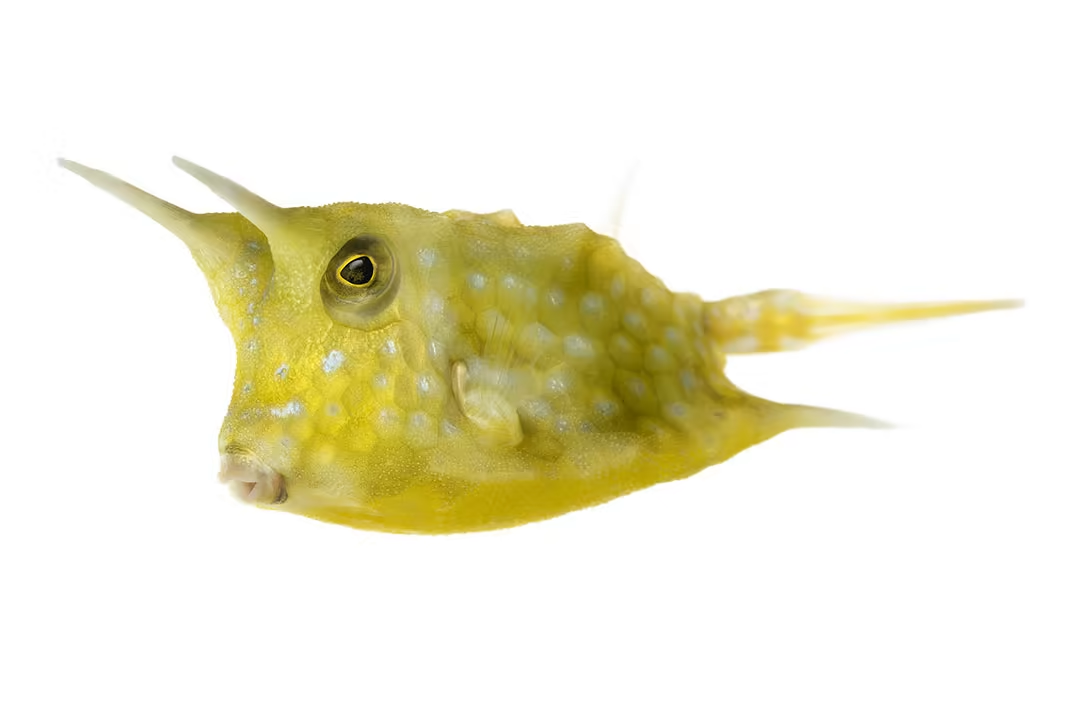
Advanced Boxfish & Cowfish Care: Ultimate Tank Setup, Food, & Safety
Learn how to care for Boxfish & Cowfish, recommended diet and aquarium setup. Find the right food, supplies and equipment at your neighborhood Petco.
Updated on April 9th, 2026
- Care Sheets
Marimo Moss Ball Care: Easy Guide to Thriving in Your Aquarium
Do you want to know how to take care of Marimo moss balls? Visit Petco to learn everything about Marimo balls care.
Updated on October 23rd, 2025
- Care Sheets
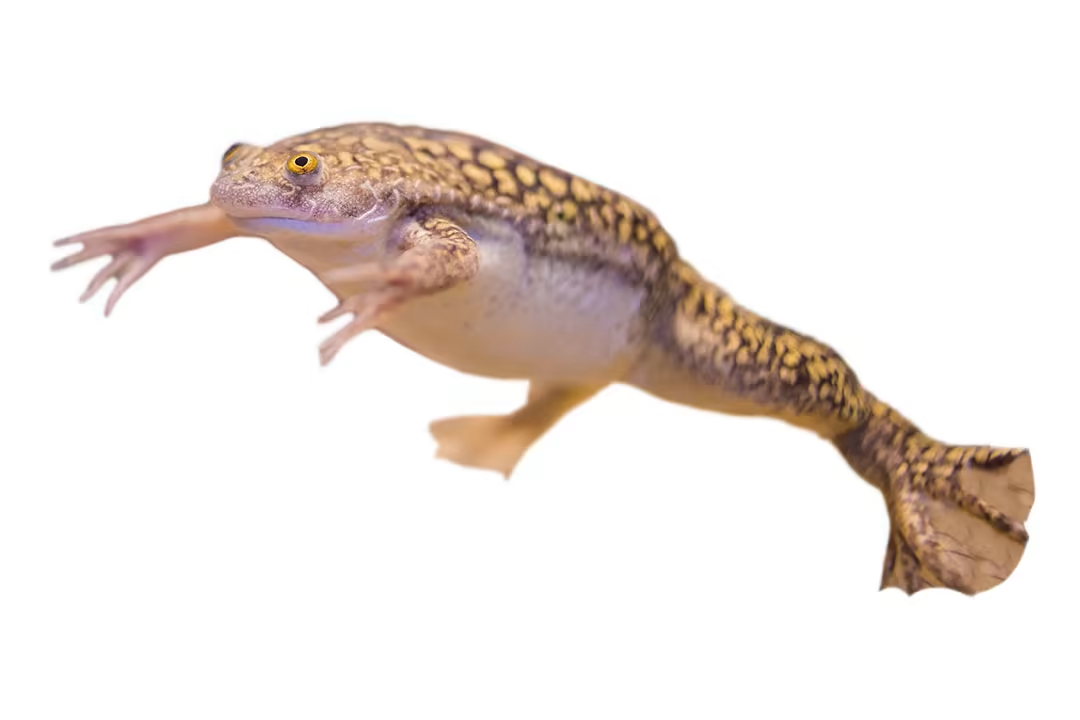
Freshwater Amphibian Care: Ultimate Tank, Food & Habitat Guide
Learn how to care for Freshwater Amphibians, recommended diet and habitat setup. Find the right food, supplies and equipment at your neighborhood Petco.
Updated on April 9th, 2026
- Vet Q & A
First fish tank: What Tetras and supplies for my 12-inch tank?
Before you buy any fish, you will need to set up the tank. A basic set up includes: a tank, filter, hood/light, heater, gravel and some decor. The tank should run without fish for at least 4 to 6 weeks. This gives it time to cycle. The Nitrogen Cycle is critical to the health of the tank and any fish you will be keeping. During this time, beneficial bacterial will populate the filter and substrate (gravel). These bacteria will be responsible for breaking down fish wastes and other wastes (uneaten food, dead plants, etc.). You will need a home test kit to monitor water chemistry (ammonia, nitrites, nitrates, pH) or you will have to submit water samples for testing. Most pet stores will do this for free or for a small fee. At first, you will see high levels of ammonia and nitrites. Over time, as bacteria grow, these levels will drop. When ammonia and nitrites are at 0 ppm and nitrates are below 20 ppm, you can consider adding fish. Regular (every 1 or 2 weeks) partial water changes as well as filter changes will be needed to maintain stable water chemistry and adequate water quality. The size of your tank will determine what fish and how many you will be able to keep. Most Tetras do best in groups, so a 12 inch tank may not be large enough. There are several article in the Petco Pet Education Center, formerly Petcoach Library that will provide more detailed information. Click on "Educational Center" at the top of the page, then scroll down to "Articles" and click. Use the Search Bar to find articles regarding aquarium set up and fish keeping.
Updated on September 24th, 2025
- Vet Q & A
How to treat goldfish fin rot in a tank with live aquatic plants?
Thanks for reaching out about Timothy & Lola. Have you tested the water for pH, ammonia, nitrites and nitrates? Correct any problems. Adding non-iodized salt (aquarium salt) at 1 tablespoon per 10 gallons can reduce osmotic stress but is probably not a treatment for fin rot. If fin/tail erosions progress, antibiotics might be needed, therefore a veterinary visit. Good luck.
Updated on September 24th, 2025
- Vet Q & A
How to treat ich in a 10-gallon tank with plants and sensitive fish?
The safest treatment would be a temporary increase in water temperature and some plain aquarium salt (NOT table salt). Ich is very sensitive to temperature. Gradually increase water temperature, by no more than 1 degree F per hour, up to 86 F. Hold it at that temperature for at least 2weeks. This will speed up the life cycle and prevent reproduction. You can perform partial water changes (30%) and vacuum the substrate during treatment. Use only aged or conditioned water that is temperature matched to prevent stress or shock. An airstone should be used to increase oxygenation since warm water does not hold as much oxygen as cooler water. This could affect some the fish. Aquarium salt can be dissolved into the tank at 1-2 teaspoons per gallon of water. Dissolve it in a cup of tank water then pour it gently into the tank. When performing water changes, treat only the amount of water being replaced with salt, not the entire tank volume. After 2 weeks, gradually decrease water temperature back down to species appropriate levels.
Updated on September 24th, 2025
- Food & Nutrition
Why are my fish dying with grey spots? How do I treat their illness?
Check the water chemistry. The discoloration could be due to elevated ammonia levels which can cause "burns". Use a home test kit or submit a water sample for testing. The local Petco may do this for free or for a small fee. Aim for an absence (0 ppm) of ammonia and nitrites with nitrates at 20ppm or less. Perform partial water changes to stabilize chemistry and/or to improve water quality. Use only conditioned water that is temperature matched to prevent stress or shock. The Neons (blue fish) appear to be infected with Ich, a parasite. Treatment is possible with commercial products found in the local Petco. Follow label directions carefully. You will need to treat the entire tank until all traces are gone. Removing a lump from your fish on your own is never recommended. You can cause severe injury. Most broad spectrum antibiotics (Kanaplex, Maracyn, Maracyn 2, etc.) found in the aquarium section of the local Petco should help treat or prevent infection. Choose one and follow label directions. Remove the carbon filter insert during treatment if indicated. Maintain pristine water quality via filtration and regular partial water changes to aid in recovery. You can feed frozen worms, just thaw then first in a small cup then place them in the tank.
Updated on September 24th, 2025
- Vet Q & A
How to clean a fish tank effectively? Should I remove my fish?
Hello, and thank you for using PetCoach. The most common (and easiest) way to clean a fish tank is with a siphon-style cleaner. Fish tanks should be cleaned in stages, generally replacing 10-15% of the water at a time. There are times where a larger cleaning might be necessary, but removing the fish and changing too much of the water at once can be quite a shock and can be dangerous to the fish, so this should be saved for only extenuating circumstances. Here's a helpful video on using a siphon cleaner: http://video.petco.com/v/18852/how-to-clean-your-aquarium-with-the-aqueon-siphon-vacuum-/ And some more reading you may find interesting on general fish tank cleaning and maintenance: http://www.firsttankguide.net/waterchange.php Hope this helps!
Updated on September 24th, 2025