Two Easy Ways to Start Earning Rewards!
Become a member today! Members-only pricing and offers, personalized care notifications, Vital Care points back on every purchase and more!
 Become a credit card member today!
Earn 2X Pals Rewards points at Petco
when you use Petco Pay!APPLY NOWLearn More About Petco Pay Benefits
Fluker's Snake Food
Get It Today


Related Articles & Questions
- Care Sheets
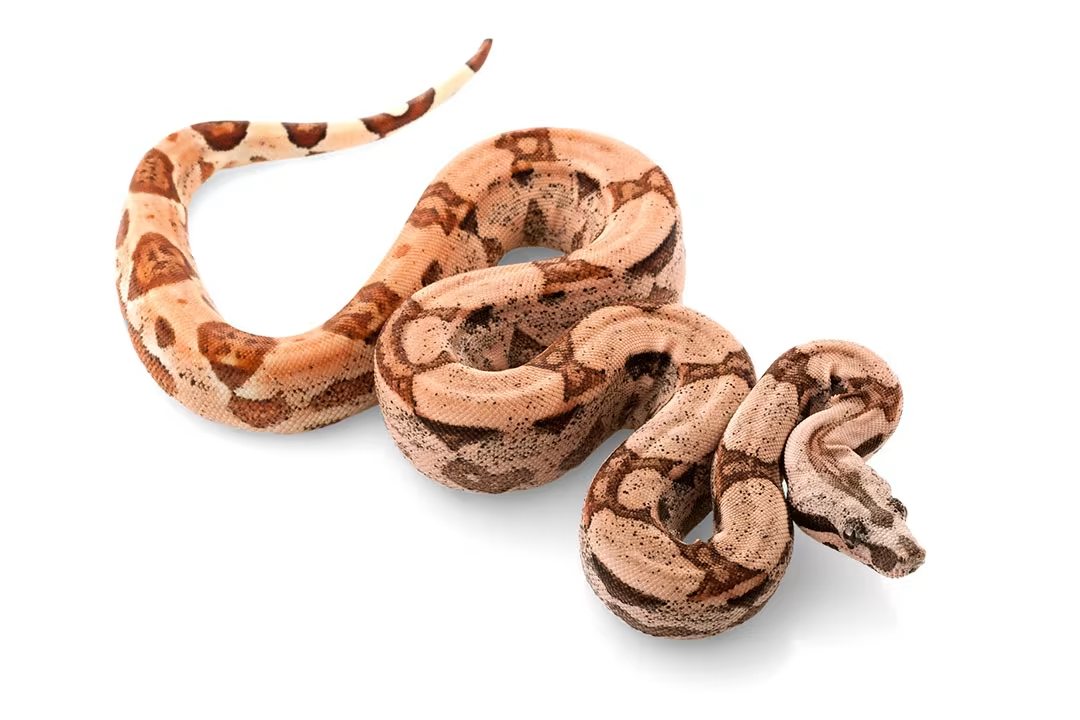
Boa Constrictor Care: The Ultimate Food, Habitat & Health Guide
Learn how to care for Boas, recommended diet & habitat setup. Find the right food, supplies & equipment at your neighborhood Petco.
Updated on April 9th, 2026
- Care Sheets
How to Thaw Frozen Foods for Reptiles or Amphibians
Learn how to thaw frozen mice for feeding time. Find out how to safely prepare and clean up after frozen meals at Petco.
Updated on December 16th, 2025
- Care Sheets
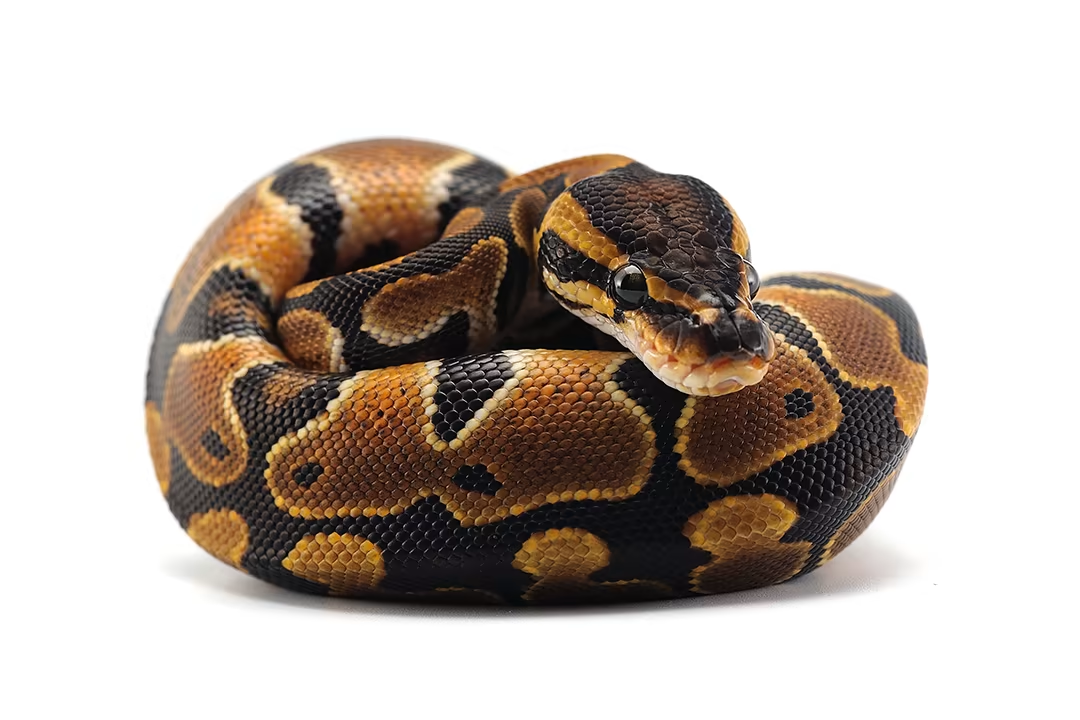
Ultimate Ball Python Care: Setup, Feeding, & Health for Beginners
Learn how to care for a Ball Python, recommended diet and habitat setup. Find the right food, supplies and equipment at your neighborhood Petco.
Updated on October 23rd, 2025
- Care Sheets
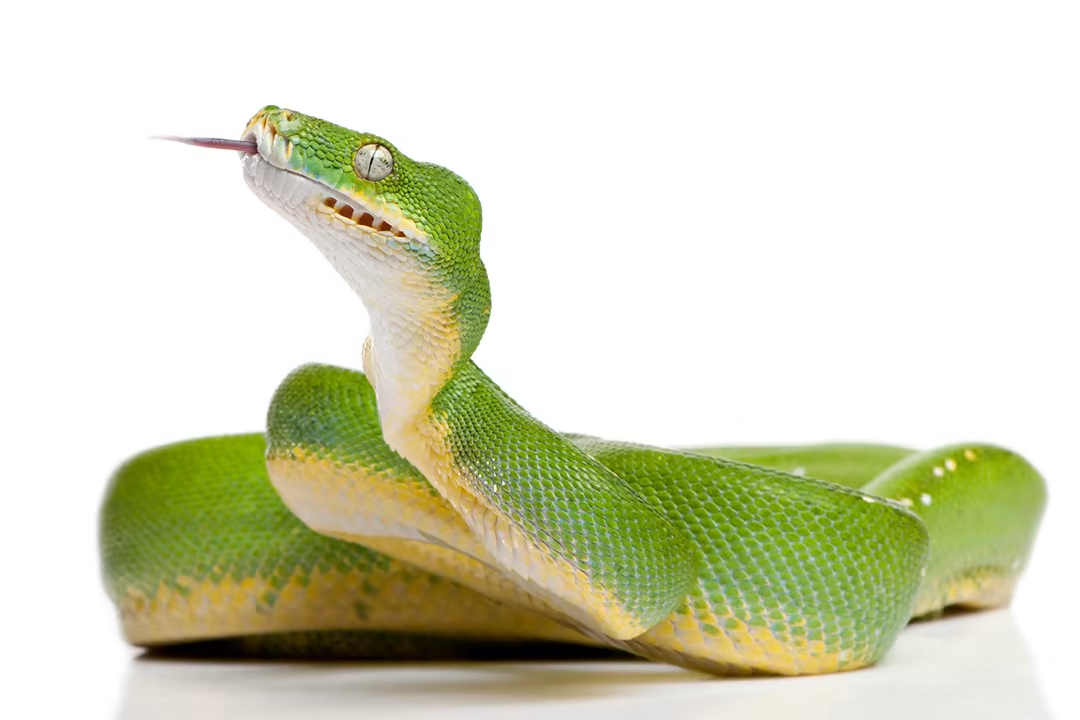
How to Care for Your Green Tree Python: Food, Habitat & Health
Learn how to take care of your Green Tree Python, tank size, diet & habitat setup. Find the right food, supplies and equipment at your neighborhood Petco.
Updated on April 9th, 2026
- Care Sheets
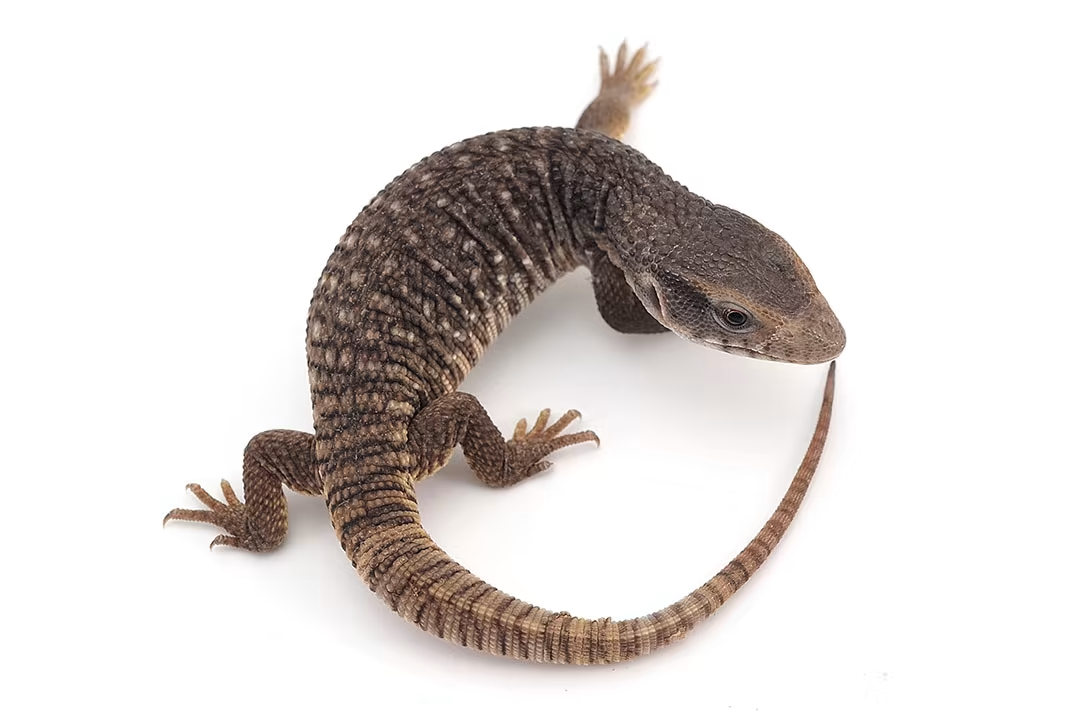
Savannah Monitor & Tegu Care: Setup, Feeding & Health Tips
Learn how to care for a monitor lizard, recommended diet and habitat setup. Find the right food, supplies and equipment at your neighborhood Petco.
Updated on April 9th, 2026
- Vet Q & A
My snake was missing, now won't eat, yellow, injured. What to do?
I'm glad you found him! Since he was missing for so long, an exam with your veterinarian or an experienced herp vet would be strongly recommended to diagnose and treat any illness or injury. In the meantime, give him a good soak in a warm 50/50 solution of water and unflavored PediaLyte. This will warm him up and provide hydration. Once he's warm and hydrated, he will be more likely to accept prey.
Updated on September 24th, 2025
- Food & Nutrition
How to feed a red ear slider with pyramiding & choose a heat lamp?
A proper diet for red-eared sliders includes a complete pellet, such as those made by ReptoMin, and dark leafy green vegetables. This can be fed once per day, and the amount should be based on how many pellets Cooper can eat in 5-7 minutes. This is just a guideline, and your veterinarian can help you to determine if this is appropriate based on Cooper's body condition score (i.e. whether she is overweight or not). For a heat lamp - photo 1 just looks like the dome, and there doesn't appear to be a bulb in it. The second lamp looks like it is a daytime only heat lamp - it is often beneficial to have a heat source that can be used during the day or at night, and if that is what you are looking for, I would recommend a ceramic heat bulb. If you are looking for only a daytime basking bulb, there are many brands that would be appropriate. The key words that you should look for are "daytime basking bulb." For watts - it depends on how far the bulb is away from your turtle - there are some brands that have a chart on the side of the box that will give you distances and temperatures that correlate with the distance. This information, combined with your desired temperature for the basking area will help you to decide on what wattage to get. I hope that gives you more information!
Updated on September 24th, 2025
- Food & Nutrition
My red sliders only eat dried shrimp. How can I vary their diet?
Shrimp should not be the sole source of nutrition. This may lead to deficiencies. Sliders are omnivorous and should be fed a combination of greens and proteins. Offer live prey such as crickets, minnows, nightcrawlers and superworms. Dark, leafy greens can be chopped finely and offered. A commercial pellet or stick formula should also be fed. To stimulate the appetite, you can soak pellets in some water used to rehydrate dried shrimp or krill. Fasting the turtles for a day or two will also get them hungry enough to eat pellets or prey. Be sure to provide adequate space, heat and lighting. Allow 10 gallons per inch of she'll as a guideline for tank size. Three sliders, when fully grown will need a large tank. UVB lighting will aid in calcium metabolism and heat is necessary for proper digestion and health in reptiles. Water temperature should range between 75F and 85F. A basking area should be 90F to 95F. Care should be taken when housing wild caught turtles with captive bred turtles. Parasites and disease present in wild sliders may infect a captive bred one. You should also check local wildlife laws regarding the keeping of wild turtles. You can read more about care of sliders here: www.anapsid.org/reslider.html
Updated on September 24th, 2025
- Food & Nutrition
My new ball python won't eat. Is it shedding or something else?
I suggest you just not feed her for a few weeks and then try again. Her lack of appetite may be due to shedding. Reptiles can not eat for months and still be fine. It is not ideal for them to go quite that long though. So, wait a few weeks, try again with frozen-thawed and see what happens. You are welcome to post again if she doesn't eat and we can see if we can help you better. Be sure he cage temperature is correct. If they are too cold they often won't eat. Basking spot temperature should be 88 to 96 degrees Fahrenheit and an ambient temperature of 78 to 80 degrees. The ambient temperature should not fall below 75 degrees.
Updated on September 24th, 2025
- Food & Nutrition
My Uro lizard isn't eating after 2 weeks. What's wrong with him?
Thanks for reaching out a about Flapjack. There are multiple reasons for anorexia including intestinal parasites/infections, metabolic disease (liver, kidney), malnutrition, poor husbandry, stress and others. Check husbandry first, as uromastyx like it hot. You can try offering a meat flavored baby food via a syringe to give calories, and also to offer water. A veterinary visit is needed to assess Flapjack and provide a diagnostic/treatment plan. Good luck.
Updated on September 24th, 2025