Two Easy Ways to Start Earning Rewards!
Earn 2X Pals Rewards points at Petco
when you use Petco Pay!
Get It Today
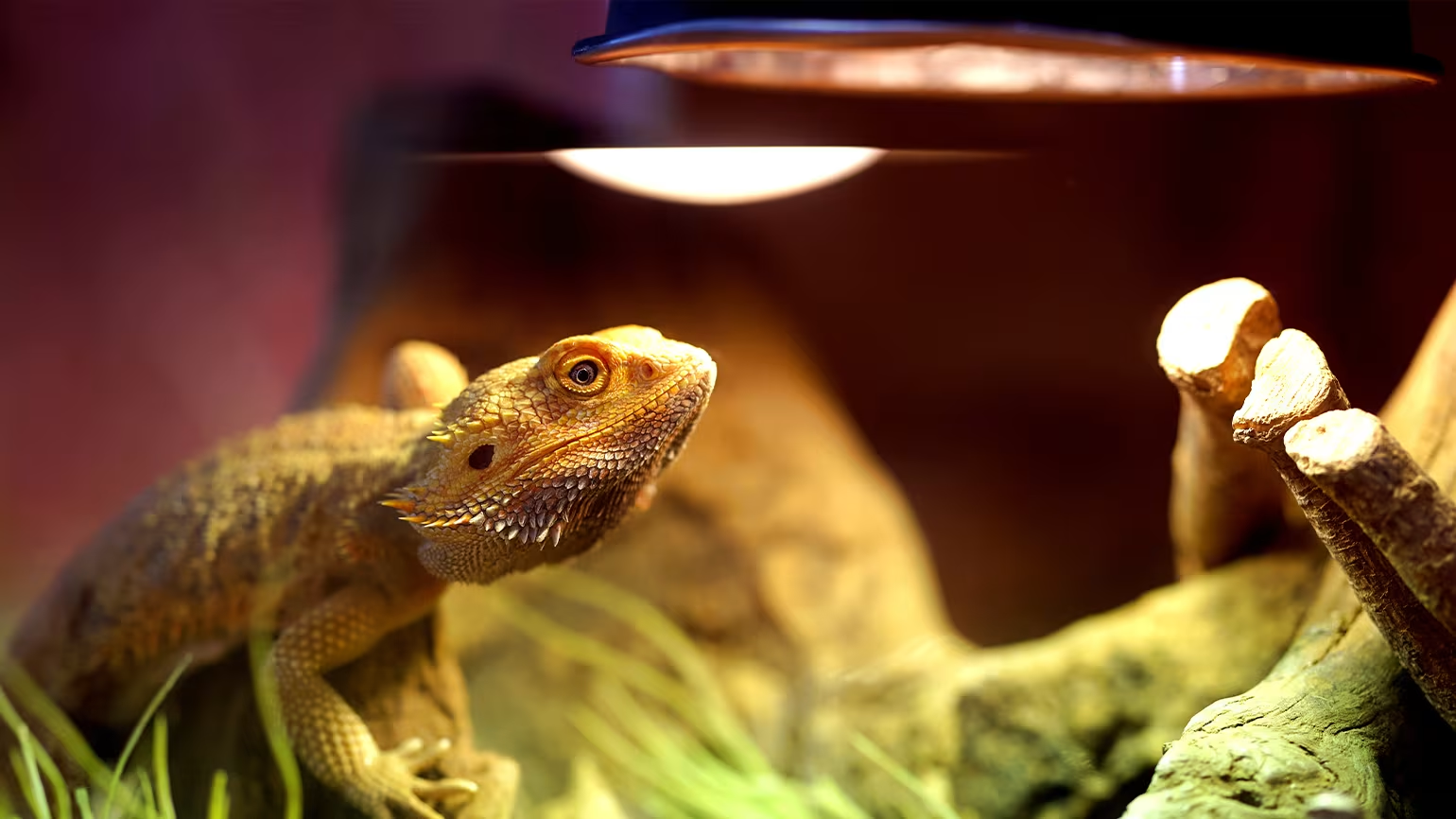
Learn the importance of UVB light for your reptiles and the right reptile lights for your pet’s habitat.
Updated on July 17th, 2026
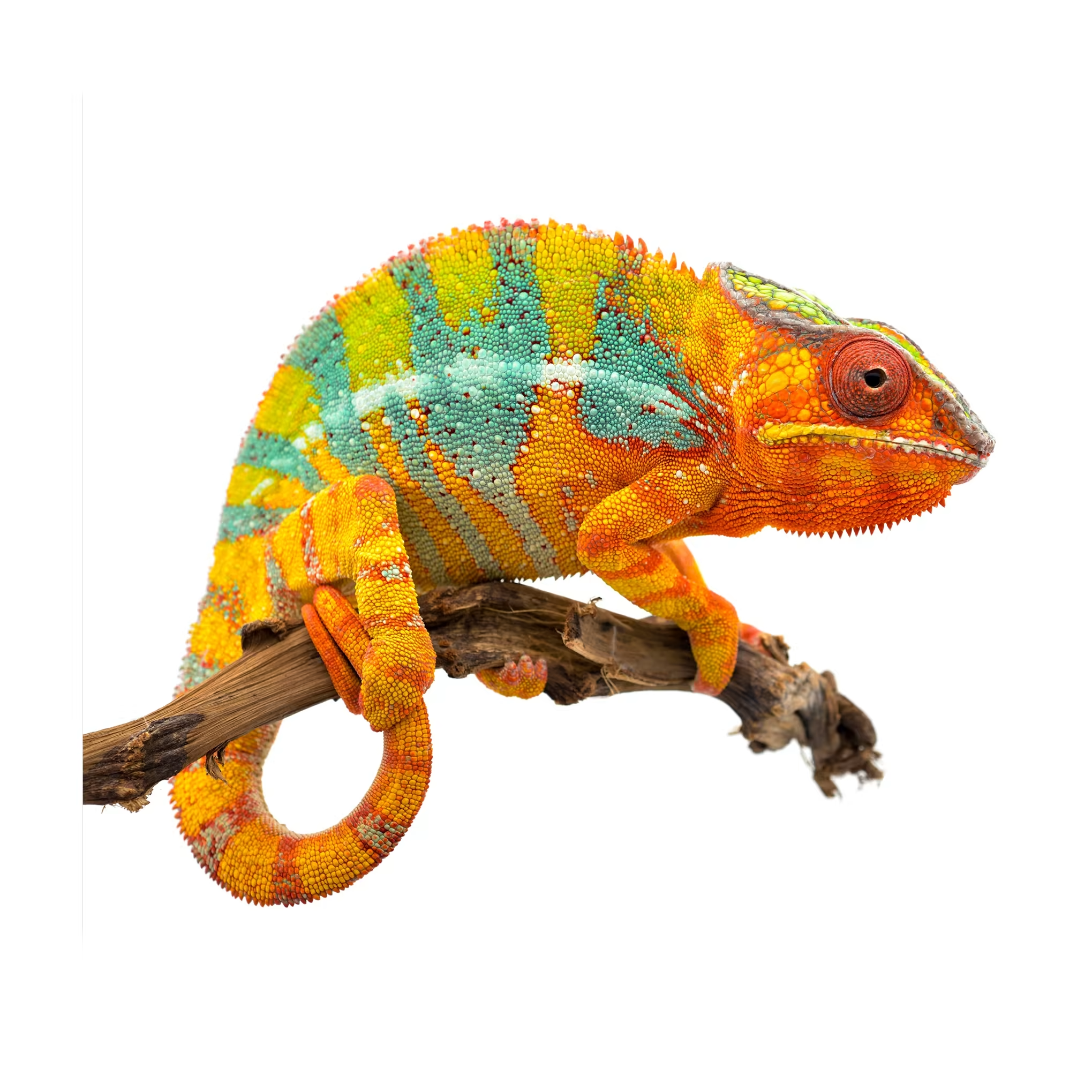
Learn how to care for warm climate Chameleons, recommended diet & habitat setup. Find the right food, supplies & equipment at your neighborhood Petco.
Updated on April 9th, 2026
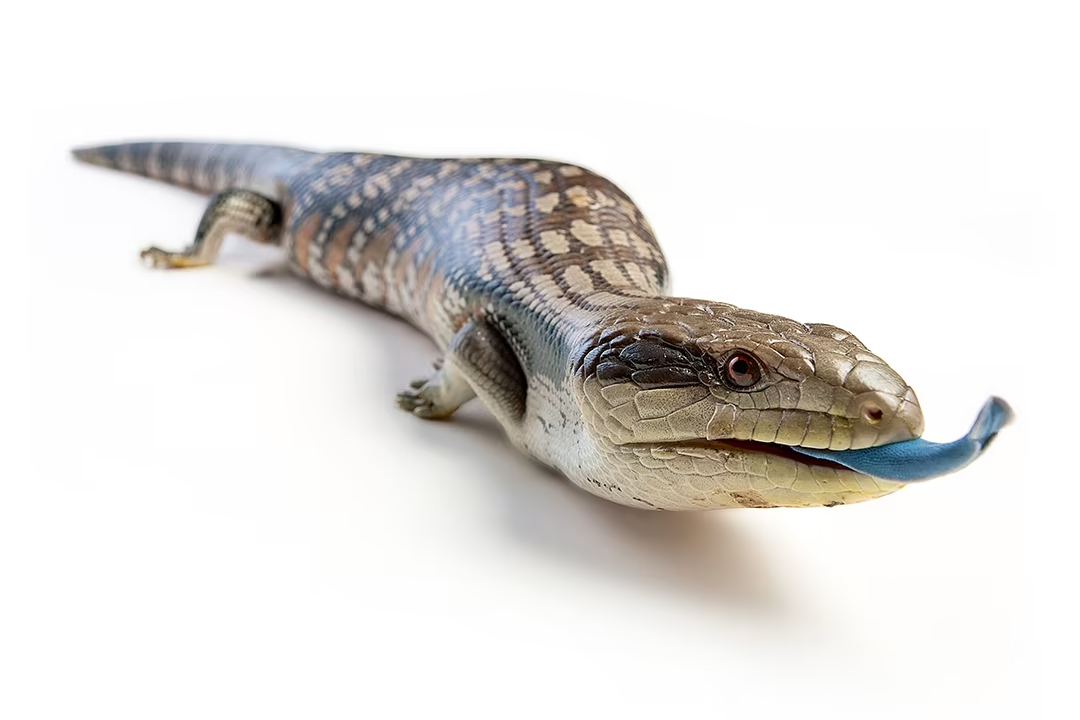
Learn how to care for Blue-Tongued Skink, recommended diet and habitat setup. Find the right food, supplies and equipment at your neighborhood Petco.
Updated on April 9th, 2026
Learn how to thaw frozen mice for feeding time. Find out how to safely prepare and clean up after frozen meals at Petco.
Updated on December 16th, 2025
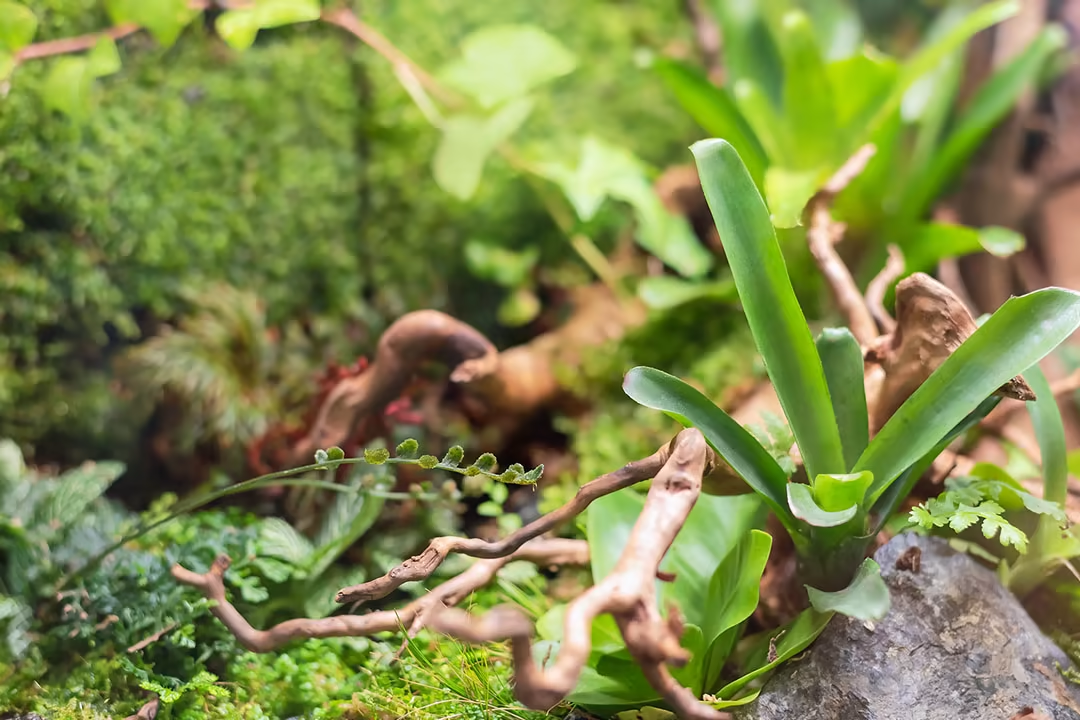
Tropical and desert terrarium plants are not only beneficial to terrestrial environments, but they also bring a more natural appearance to your reptile’s habitat.
Updated on October 23rd, 2025
Ideally, the UVB light source should run the entire length of the tank. A thermometer/hygrometer should be on each end of the tank to confirm cool and warm sides. Use a digital thermometer to verify temps. Those little ones you have can be inaccurate. Provide a hide on both sides as well. Personally, I would remove the fake grass as it has the potential to cause eye injuries. Your tank looks good otherwise.
Updated on September 24th, 2025
The ReptiSun 5.0 UVB bulb will provide sufficient UVA/UVB lighting for an anole. Be sure it is not obstructed by glass or plexiglass and replace it every 6 months (it loses strength over time). Leonard should have 12-14 hours or lighting each day. The simplest way to ensure this is to place the tank light and UVB light on a timer. If temps drop below 65 F at night, you'll need a supplemental heat source for the enclosure. A ceramic heat emitter (CHE) will emit heat with no visible light so as to not disturb him at night. You can read more about anole care here: http://www.anapsid.org/anole.html
Updated on September 24th, 2025
It is too small to be used for much beyond transport, quarantine or temporary housing (i.e. during cleaning of main enclosure). The plastic construction does not allow for light or heat sources which most reptiles or exotic pets require.
Updated on September 24th, 2025
If you are using a heat lamp, move it farther away (raise it up) from the surface of the tank until temps are appropriate. If you are using a heating pad or UTH (under tank heater), they should be used with a rheostat or thermostat so that you can adjust the temperature. Make sure the enclosure is large enough to provide a warm side and a cool side. If Egon gets too hot, he can move to the cool side until he wants to bask again or warm up.
Updated on September 24th, 2025
Check the temperature in his enclosure. Low temps can affect appetite in reptiles. If he isn't eating or not exposed to high quality UVB lighting, he can become calcium deficient which could account for the tremors. If he is less than 30 inches long, confirm a basking temp of around 115 F. If he is bigger, bump basking temp to between 125 F and 135 F. Multiple lower wattage lights over a larger area are recommended over one high intensity light source. Try to get him to eat and offer a calcium supplement. If you can get a liquid supplement, that would be best right now. Zoo Med and Fluker's offer such a supplement.Soak him in a warm 50/50 solution of water and unflavored PediaLyte to treat or prevent minor dehydration. if he doesn't eat or if the tremors worsen, have him examined by your veterinarian or a vet experienced in treating reptiles as soon as possible.
Updated on September 24th, 2025