Two Easy Ways to Start Earning Rewards!
Earn 2X Pals Rewards points at Petco
when you use Petco Pay!
Get It Today
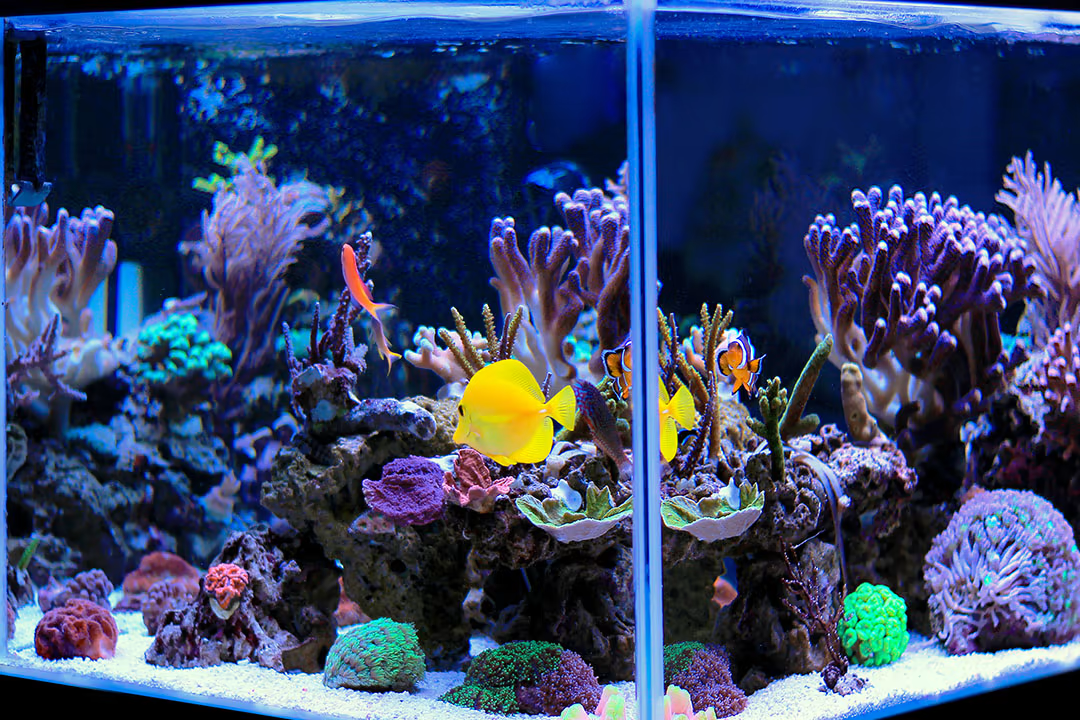
Learn how to set up a saltwater fish tank and key considerations regarding placement, supplies needed, and the overall set up process.
Updated on October 23rd, 2025
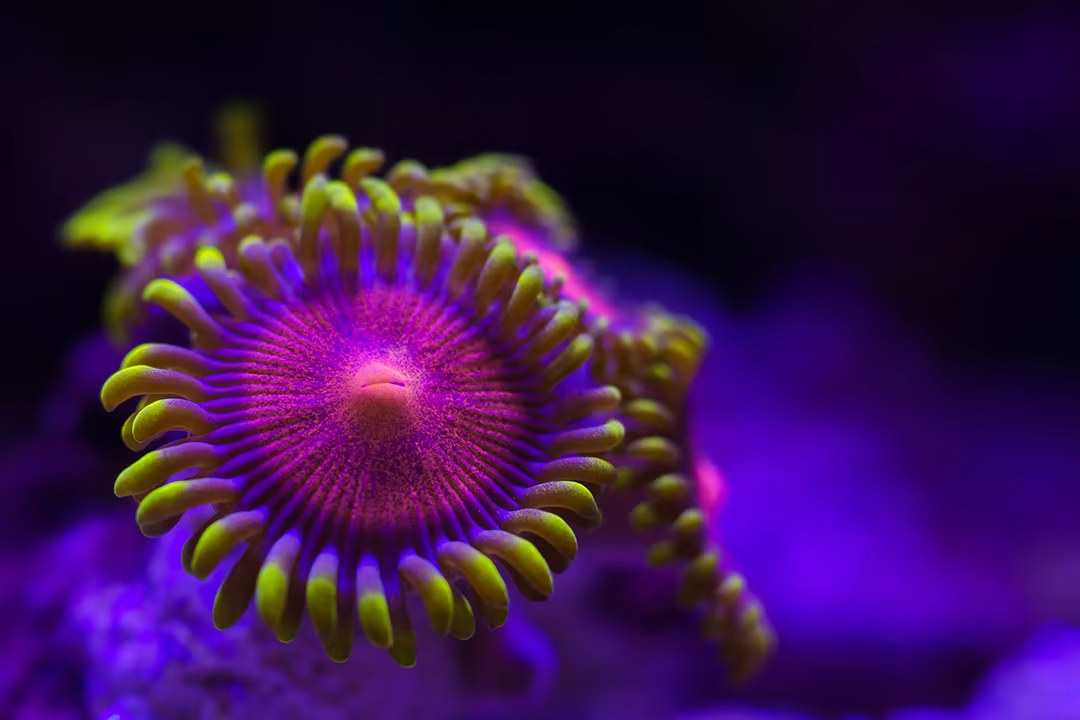
Learn how to care for soft coral, recommended care & habitat setup. Find the right food, supplies & equipment at your neighborhood Petco.
Updated on April 9th, 2026
Learn how to pick the right aquarium plants, substrate, lighting, and fertilizers to ensure that your aquarium plants thrive and stay healthy.
Updated on July 17th, 2026
Before establishing an aquarium at home, learn more about the basics of fish care.
Updated on June 19th, 2026
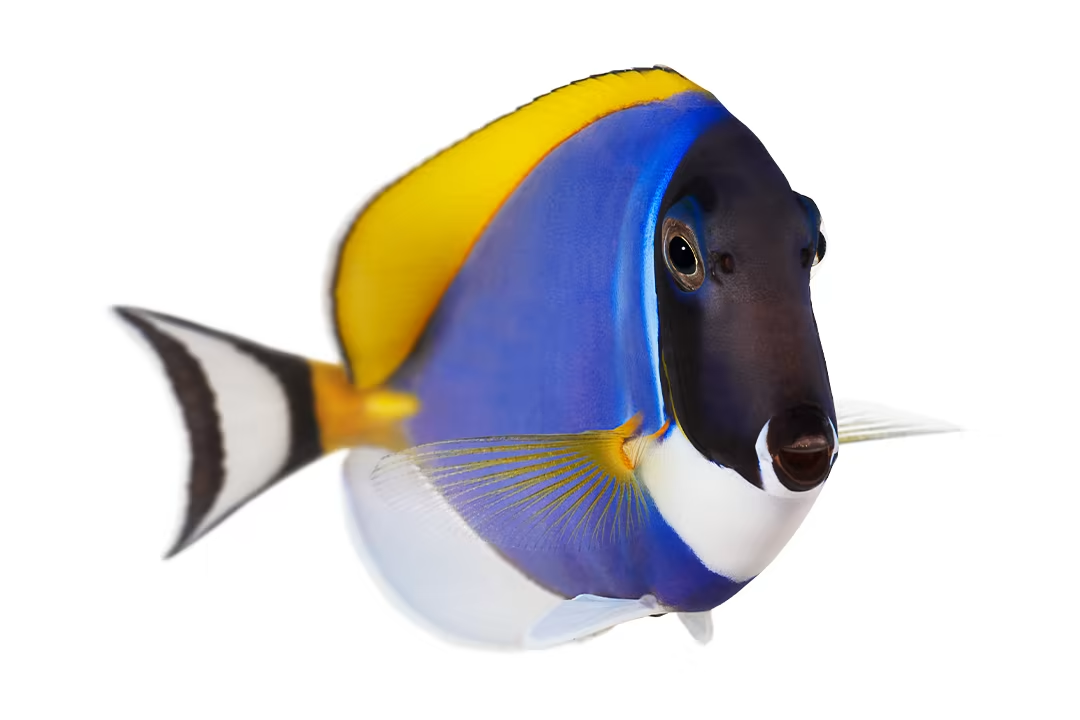
Learn how to care for a tang fish, recommended diet and aquarium setup. Find the right food, supplies and equipment at your neighborhood Petco.
Updated on April 9th, 2026
Before you buy any fish, you will need to set up the tank. A basic set up includes: a tank, filter, hood/light, heater, gravel and some decor. The tank should run without fish for at least 4 to 6 weeks. This gives it time to cycle. The Nitrogen Cycle is critical to the health of the tank and any fish you will be keeping. During this time, beneficial bacterial will populate the filter and substrate (gravel). These bacteria will be responsible for breaking down fish wastes and other wastes (uneaten food, dead plants, etc.). You will need a home test kit to monitor water chemistry (ammonia, nitrites, nitrates, pH) or you will have to submit water samples for testing. Most pet stores will do this for free or for a small fee. At first, you will see high levels of ammonia and nitrites. Over time, as bacteria grow, these levels will drop. When ammonia and nitrites are at 0 ppm and nitrates are below 20 ppm, you can consider adding fish. Regular (every 1 or 2 weeks) partial water changes as well as filter changes will be needed to maintain stable water chemistry and adequate water quality. The size of your tank will determine what fish and how many you will be able to keep. Most Tetras do best in groups, so a 12 inch tank may not be large enough. There are several article in the Petco Pet Education Center, formerly Petcoach Library that will provide more detailed information. Click on "Educational Center" at the top of the page, then scroll down to "Articles" and click. Use the Search Bar to find articles regarding aquarium set up and fish keeping.
Updated on September 24th, 2025

Water softeners leave very little salt residue in the treated water. Most, not all, fish *should* do fine in softened water. Make sure you get species that does better in soft water. Use a hardness kit and monitor KH. This parameter is what can affect pH. You can set aside a gallon or two and test it after it has aged for 24-48 hours to confirm it is safe to use. Check the softener unit for a bypass valve. Some units will have one or you can get one installed. Taps/faucets outside may not be in line with the softener, so you can use water from there if necessary.
Updated on September 24th, 2025
Check the water chemistry. The discoloration could be due to elevated ammonia levels which can cause "burns". Use a home test kit or submit a water sample for testing. The local Petco may do this for free or for a small fee. Aim for an absence (0 ppm) of ammonia and nitrites with nitrates at 20ppm or less. Perform partial water changes to stabilize chemistry and/or to improve water quality. Use only conditioned water that is temperature matched to prevent stress or shock. The Neons (blue fish) appear to be infected with Ich, a parasite. Treatment is possible with commercial products found in the local Petco. Follow label directions carefully. You will need to treat the entire tank until all traces are gone. Removing a lump from your fish on your own is never recommended. You can cause severe injury. Most broad spectrum antibiotics (Kanaplex, Maracyn, Maracyn 2, etc.) found in the aquarium section of the local Petco should help treat or prevent infection. Choose one and follow label directions. Remove the carbon filter insert during treatment if indicated. Maintain pristine water quality via filtration and regular partial water changes to aid in recovery. You can feed frozen worms, just thaw then first in a small cup then place them in the tank.
Updated on September 24th, 2025
Thanks for reaching out about Nemo and including photos. There is no evidence of Ich in the photos. Have you tested water quality for pH, ammonia, nitrites and nitrates? Correct problems. If having difficulty breathing (slow gill rate) add an air stone. A veterinary visit is recommended to assess and provide a diagnostic/treatment plan. Good luck.
Updated on September 24th, 2025
Thanks for reaching out. If is a good idea to fast for 1-2 days prior to shipment, this decreased feces and will help to keep the ammonia down. Typically clear bags are utilized with about 50% water, and 50% air/oxygen used. A local pet store might be able to assist, as they get shipment in (so have older bags and boxes, which need to be disinfected) and hopefully the skills to ship. Check with the airline also, box needs to be well labelled "LIE ANIMALS" and "THIS END UP". Sometimes a health certificate for interstate travel is needed, so contact airline and State of Utah, veterinarian. Good luck.
Updated on September 24th, 2025