Two Easy Ways to Start Earning Rewards!
Earn 2X Pals Rewards points at Petco
when you use Petco Pay!
Goldendoodles blend the Golden Retriever’s friendliness with the Poodle’s intelligence, creating an affectionate, energetic companion who loves play, training and family time. With wavy or curly coats and a naturally cheerful personality, they adapt well to many homes.
Temperament
Affectionate, playful, intelligent
Colors
Gold, Cream, Red, Brown, Black, White, Merle
50 - 90 lb
22 - 24 in
10-15 Years
Maintenance Level
Low Maintenance
High Maintenance
Friendliness
Reserved
Extroverted
What is a Goldendoodle? You won’t find them listed as a registered breed, and their appealing intersection of looks, personality and intelligence may seem too good to be true. A “designer dog” that’s born from Golden Retriever and Poodle parents, the Goldendoodle holds many of these parent breeds’ best traits while offering a bright-eyed playfulness all their own.
Goldendoodle weight, height and coat color can vary widely. While Goldendoodles often share their Golden Retriever parent’s signature golden fur, their coats can also come in colors ranging from white to black to brindle, with textures ranging from curly to fluffy. Though their size and appearance can differ, Goldendoodles are nearly universal in sharing a happy, affectionate personality marked by playfulness, intelligence and athleticism. Learn more about the beautiful, friendly Goldendoodle crossbreed and why so many pet parents love bringing them into their homes.
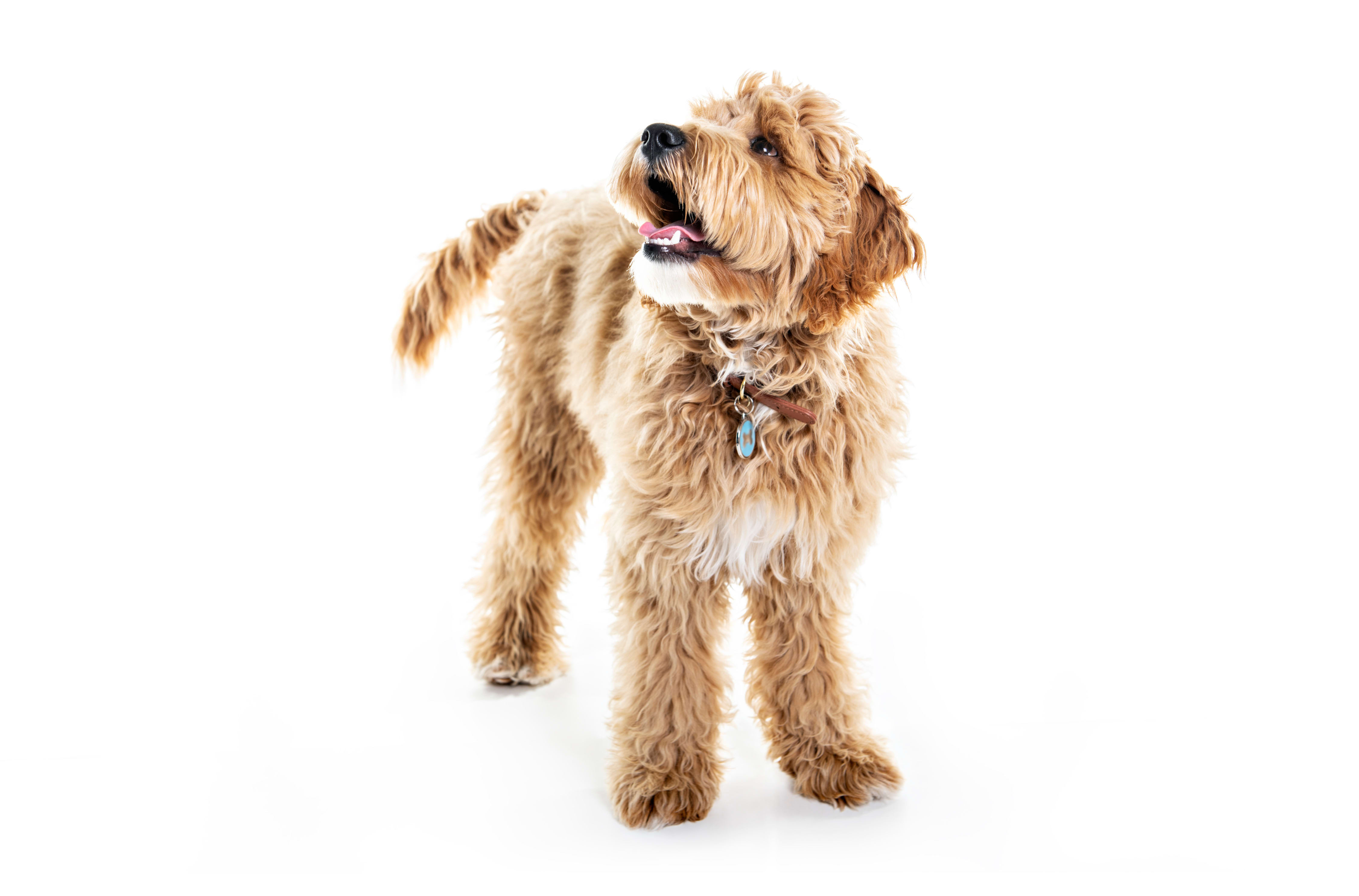
Goldendoodles are medium to large, athletic dogs with a balanced frame and expressive, friendly features. Their coats can range from loose waves to tight curls, appearing in a wide spectrum of colors and patterns inherited from both Golden Retriever and Poodle parents. Whether fluffy, curly, or somewhere in between, their soft, textured coat gives them a distinctive, teddy-bear look that many pet parents adore.

Goldendoodle weight, height and coat color can vary widely. While Goldendoodles often share their Golden Retriever parent’s signature golden fur, their coats can also come in colors ranging from white to black to brindle, with textures ranging from curly to fluffy. Though their size and appearance can differ, Goldendoodles are nearly universal in sharing a happy, affectionate personality marked by playfulness, intelligence and athleticism. Learn more about the beautiful, friendly Goldendoodle crossbreed and why so many pet parents love bringing them into their homes. The Goldendoodle temperament is one of their most compelling traits, as the sunny disposition of a Golden Retriever and the intelligence of a Poodle meet in this crossbreed. Goldendoodles are as active and energetic as both parent breeds and tend to exhibit the skillful agility of Poodles. But they also have a style all their own, as Goldendoodle size, coloring and coat texture can vary dramatically from one dog to the next.
Caring for a Goldendoodle means nurturing both their playful energy and bright intelligence through consistent exercise, training and enrichment. With attentive grooming, balanced nutrition and routine preventive care, these social companions thrive as cheerful, devoted family pets.
Since there is no recognized breed standard for Goldendoodle weight, size, color or coat texture, there are many different coat types for Goldendoodles to be found. Some have curly, longer coats more similar to those of a Poodle, while others can be shorter, thicker and possibly double-coated to more closely resemble Golden Retrievers. Add the whole range of Goldendoodle haircuts pet parents give their dogs and you’ll find that no two Goldendoodles look exactly alike.
What is a Goldendoodle trait nearly all these diverse dogs have in common? Their tendency not to be big shedders like a Golden Retriever. In fact, some Goldendoodles shed so little that they’re often referred to as non-shedding dogs—losing hair sparsely and infrequently in a manner more similar to their Poodle parents.
Brushing: About once a week, use a slicker brush to gently comb out your Goldendoodle’s coat. This will not only help keep their coat from becoming matted, but it will also help remove any stray hairs before they end up on your clothes and couch. Brushing also removes debris that may be stuck in your Goldendoodle’s fur, including leaves, dirt, burrs, bugs and other potential irritants—which is especially important if your Goldendoodle experiences dermatitis.
For those Goldendoodles that will require regular grooming—or even those that are losing some coat—utilize Petco’s professional grooming services and talk with a pet stylist about the best options for your dog’s specific coat variety.
Bathing: Because a love of swimming is often part of the Goldendoodle temperament, your dog may not be as averse to bath time as some breeds. Even so, it’s not usually necessary to bathe your Goldendoodle more frequently than once per month, especially since too many baths can dry out their sensitive skin. If your Goldendoodle has skin allergies, sebaceous adenitis or another condition that makes their epidermis irritated, your veterinarian may recommend a medicated shampoo to help soothe their skin and quell itching.
Nail trimming: Most Goldendoodles are easygoing and eager to please their pet parents, making even potentially difficult chores like nail trimming a relatively stress-free experience. Take a paw securely in your hand while your dog is sitting still and trim each nail at a 45-degree angle, avoiding the tender pink quick. Make sure to give your Goldendoodle clear cues and reward their patience with plenty of love and affirmation. Your Goldendoodle will be less likely to become agitated if you project calm instead of tension.
Teeth brushing & Dental Treats: Even dogs can develop plaque, tartar and oral infections. Every pet should have a daily dental routine, as regular toothbrushing can help prevent oral and dental problems from developing and can also help you spot potential issues. A full-grown Goldendoodle should have their teeth brushed at home daily—or at minimum 2 or 3 times per week—with a dog-safe toothbrush and toothpaste. Unlike human toothpaste that typically has a minty or fresh flavor—and can be toxic to dogs—dog toothpaste is made with the savory, meaty flavors that they enjoy. In addition to home toothbrushing, you should take your dog in for a professional veterinary dental cleaning at least once a year.
Toothbrushing isn’t the only way you can care for your dog’s teeth and gums at home between dental cleanings. Dental treats that help scrape away plaque and tartar aren’t just beneficial for your Goldendoodle’s dental health—they’re also entertaining and enjoyable for your dog. These types of treats and chews are made from materials that are safe for your Goldendoodle’s mouth, and they gently scrape the teeth and gums as your dog chews them. Just remember that your Goldendoodle’s size determines what size treats they should be given. Treats that are too big or small can present a choking hazard or harm your dog’s mouth and digestive tract—always check the size guidelines of any dental treat you want to give your Goldendoodles.
Professional grooming: Goldendoodle fur is beautifully textured and varies from one dog to another. If you’d like some professional assistance in grooming your dog’s unique coat, or if you feel out of your depth performing Goldendoodle grooming at home, you can rely on Petco’s professional grooming services. Your Goldendoodle will receive a trim, bath and nail clipping in their breed-specific grooming session, and you can add optional services to create a custom spa day for your dog.
Some dog breeds are known to be stubborn and more difficult to train, but not the Golden Retriever or the Poodle—and not their adorable offspring, the Goldendoodle. In fact, Goldendoodles are typically naturally responsive and adaptable. Goldendoodle training can help promote clear communication, and because Goldendoodles are eager learners, they can quickly pick up on training cues. Goldendoodles also have a deep drive to please their favorite people, providing them with motivation to do a good job and win your praise.
Goldendoodle training is essential at a young age. Like any puppy, they’re full of energy—and that mischievous, stubborn Golden Retriever streak may make an appearance. Here are some tips on how to train a Goldendoodle.
Training sessions are for everyone
When it comes to training your Goldendoodle puppy, remember that you’re teaching your entire household how to be pet parents as well. Most Goldendoodles are intelligent and eager to learn, but if they’re getting mixed messages from different people, they’ll get confused.
Make sure everyone is on the same page and knows the right training cues and hand signals to communicate with your pet. It can be very tempting for visitors and younger family members to indulge your cute puppy and encourage undesired behaviors, but this can hinder the puppy’s progress.
You should always use positive reinforcement during Goldendoodle puppy training. After a long day, it can be easy to get frustrated or shout when they don’t listen or have an accident on the carpet. However, these techniques can negatively impact their mental health and likely decrease the trust they have placed in you. You want to strengthen your bond with your puppy while training, and positive reinforcement is widely recognized as the most effective and ethical way to do this.
Crate training can benefit you and your dog
Goldendoodle crate training can be a great training solution when your puppy is still learning. It helps with potty training—many dogs will instinctively avoid going in their crate—and it gives them a secure area of their own to rest when they’re tired or stressed. It also helps protect them from wandering around and hurting themselves in the middle of the night when you’re sleeping. Providing a secure place for your pup to rest and relax can be the first sign of trust that establishes the cornerstone for later training.
The key is to make their crate a happy place. You should neverforce your puppy into their crate—instead, lure them with treats and let the experience be voluntary. If you turn crate time into a positive, you will find that they’ll start heading to their crate on their own when they’re sleepy or need a break.
Never leave your puppy in their crate for an extended period. Remember, your pup will try to avoid going to the bathroom in their crate—a crucial part of Goldendoodle potty training. You also shouldn’t use the crate as a place for timeouts or punishment, as your dog will start forming negative associations with it.
A good guideline for crate time is taking your dog’s age in months and adding one—this is the maximum number of hours they should be left in the crate at a time. For example, if your dog is six months old, they should only be in the crate for a maximum of seven hours. It may be difficult waking up in the middle of the night to let your puppy go pee, but Goldendoodle puppy training is a lot like raising a toddler—it takes patience and time.
Consistency is the key to Goldendoodle potty training
Puppy potty training is something you want to accomplish sooner rather than later, but every dog is different. Here are some tips when you’re first learning.
When figuring out how to potty train a Goldendoodle puppy, patience and consistency are key factors. It’s also important to remember your pup has a tiny little bladder—taking them outside as frequently as possible will help prevent accidents. Eventually, they’ll get the hang of it.
Suggested training services
At Petco, we realize how difficult it can be to fit training into your busy schedule. We have a variety of training classes that can be attended either in person or online. Whether you need assistance with a puppy or adult dog, our classes focus on the behaviors and cues that are most helpful to you. We even have private lessons in case your pup is having trouble socializing. Having the proper tools in your Goldendoodle training arsenal can help bridge the communication gap with your pet and help you understand each other better.
Are you thinking of bringing a Goldendoodle home? This hybrid breed has great qualities that make them a wonderful addition to many different types of families. Another positive aspect of this breed is that major health issues with Goldendoodles are not as common as some other breeds. As a hybrid between a Golden Retriever and a Poodle, Goldendoodles can have less risk of breed-related health issues compared to some pure breeds. In fact, the life expectancy of a Goldendoodle is an impressive 10 to 15 years.
This isn’t to say that Goldendoodle health issues are non-existent. Goldendoodles are still at risk of some of the same illnesses and hereditary conditions seen in Golden Retrievers and Poodles. As you begin your adoption journey, it’s important to be aware of Goldendoodles’ common health issues so you can do your research and ask breeders, rescue organizations or shelters the right questions.
Here are the most common Goldendoodle health issues that pet parents are likely to see.
Subvalvular aortic stenosis occurs when the area beneath the heart’s aortic valve becomes narrowed. This hereditary condition common in large breeds can cause complications when blood flows through the heart. In moderate or severe cases, this condition can put extra strain on your Goldendoodle’s heart, potentially leading to more serious long-term heart issues.
Goldendoodles with very mild forms of subvalvular aortic stenosis may have few—if any—symptoms. It’s typically in moderate or severe cases that you might start to notice changes in your dog’s behavior—but even a young puppy might show symptoms if this is something they were born with. Your Goldendoodle may seem weak, have difficulty breathing or even temporarily lose consciousness. In a worst-case scenario, their heart may even work so hard that it suddenly stops beating.
Unfortunately, there is no cure for subvalvular aortic stenosis. If your pet’s condition warrants it, your vet may prescribe beta-blocker medication to help ease the work of the heart. Your vet may also advise you to limit your Goldendoodle’s activity level. In more severe cases, surgical procedures may be recommended to help correct the obstruction on the heart.
There is much that veterinary medicine still doesn’t definitively understand about this scary neurological disorder that can cause seizures in dogs. Epilepsy can be inherited or a result of structural problems in the brain. Unfortunately, many times the cause of epilepsy is unclear. It is important to document the effects of your dog’s seizures to help your veterinarian determine causes and treatments. Taking a video of seizure activity is a good way to help your vet diagnose and treat the disorder.
The most dramatic symptom of this Goldendoodle disease is a seizure, but you may also notice that your dog is confused, has trouble breathing, drools excessively or becomes unresponsive. Contact your vet immediately if you suspect your pup has had a seizure.
If your vet diagnoses Goldendoodle with epilepsy, they will likely prescribe anti-epileptic drugs—or AEDs. AEDs can have strong side effects but are typically not as severe as the effects of epilepsy itself. With testing and frequent follow-ups, your vet will work to find the right drug balance for your pet.
This common genetic condition is more likely to be found in larger breeds of Goldendoodles. However, Goldendoodle hip dysplasia can appear in any size dog of this breed. Hip dysplasia occurs when the ball and socket of the hip do not fit together properly, causing improper wear on the joint. Over time, this mismatch can wear away the joint, causing pain, arthritis, loss of mobility and—commonly in Goldendoodles—back leg problems.
Hip dysplasia is more commonly found in older dogs, but it can also affect young dogs. Symptoms to look out for include stiffness or limping, difficulty standing, reluctance to run or jump and decreased activity.
Prevention is one of the most highly recommended courses of action for Goldendoodle hip dysplasia. Make sure to feed your puppy appropriate puppy food so they grow at a moderate pace. Manage your dog’s weight throughout their life and offer training treats in moderation, as obesity can exacerbate hip dysplasia later in life. Finally, supplements like glucosamine can help support joint health.
This group of degenerative diseases causes the deterioration of the photoreceptor cells in your dog’s retina responsible for recognizing light. Over time, progressive retinal atrophy—or PRA—can lead to blindness.
PRA is a gradual Goldendoodle health issue. The first symptom many pet parents notice is a loss of their pet’s night vision. Going out to use the bathroom after dark may cause them to hesitate because they feel vulnerable, and they may bump into furniture in unfamiliar rooms that aren’t brightly lit. Other symptoms include glassy eyes and dilated pupils.
At this time, there are no known effective treatments for progressive retinal atrophy. The recommended course of action is to work with your vet to manage your pet’s symptoms and find ways to make it easier for your pup to get around without their full sight.
The highest cancer rate is found in the Golden Retriever breed. Because this breed makes up half the genes of a Goldendoodle, they can have a higher risk of cancer. Fortunately, over the past years, new treatment options have dramatically increased the survival rate for many forms of cancer in Goldendoodles.
Many symptoms of cancer in Goldendoodles—and other dogs—are similar to cancer symptoms in humans and can vary depending on the type of cancer. These include lumps, enlarged lymph nodes, poorly healing wounds, bleeding from orifices, lameness or swelling in the bone. Regular brushing and health checks can increase the likelihood of catching cancer symptoms early.
Treatment recommendations will depend on the type of canine cancer. Your vet will likely refer you to a veterinary oncologist who will design a treatment plan for your pup. Common cancer treatments include tumor removal, surgery, chemotherapy, radiation therapy, immunotherapy or a combination of these treatments.
As your dog ages, proteins in the eye can begin to clump together over and within the lens, creating a cloudy film that blocks light from entering the eye. If left untreated, cataracts will continue to grow and can cause a total loss of vision.
If you notice that your older Goldendoodle’s eyes begin to look cloudy, they may be suffering from cataracts and you should consult your vet.
One treatment option for cataracts is having your veterinary ophthalmologist remove them surgically. This treatment typically has a very high success rate and can usually restore your Goldendoodle’s vision.
This Goldendoodle skin issue usually comes from their poodle heritage. It is uncommon and occurs when a dog’s immune system attacks the sebaceous glands in the skin. Sebaceous glands produce oils that naturally moisturize your dog’s skin and keep their coat shiny.
The symptoms of sebaceous adenitis can vary. You may first notice your pet’s fur looks dull or feels brittle. Over time, your dog may begin to lose patches of hair and develop scaly or crusty skin. You may even see lesions on your Goldendoodle’s skin—usually on the head and back.
At this time, there isn’t a widely agreed-upon treatment for sebaceous adenitis. Your vet may prescribe topical medications, special shampoos or recommend vitamin A and omega-3 and -6 fatty acid supplements. The good news is that this health issue with Goldendoodles is mostly a cosmetic condition and typically isn’t painful to your pup. However, sebaceous adenitis can increase your pet’s risk of a secondary bacterial or yeast infection. You can find a variety of medications—along with vitamins and supplements—at the Petco dog pharmacy.
This hormonal disorder is characterized by a deficiency of hormone production in your pup’s adrenal glands. These glands produce the hormones cortisol and aldosterone, which regulate many functions within the body.
Addison’s disease can lead to a wide range of symptoms. You may notice your dog becomes lethargic and weak. Your pet may have a low appetite, dehydration, lose weight and experience diarrhea and tremors. If you observe any of these symptoms, contact your vet.
The good news is that while Addison’s disease can’t be cured, it can be managed in most dogs. Your vet can prescribe oral or injectable medications—which will likely need to be taken for life—to replace your Goldendoodle’s cortisol and aldosterone. A Goldendoodle with Addison’s disease can live a full and symptom-free life with proper treatment.

Like all dogs, Goldendoodles are most likely to thrive on a balanced diet that is nutritionally dense with high-quality protein, fat and easily digestible carbohydrates. Because of their active nature, Goldendoodles—especially large-sized ones—may need additional joint support in the form of food or supplements that contain glucosamine, chondroitin, MSM or fish oil. Always make sure that whatever dog food you give your Goldendoodle is appropriate for their age, size and activity level. Because Goldendoodle weight issues can arise when these dogs don’t get as much activity as they require, be careful not to overfeed or under-exercise your dog.
From nutritious food and dog treats to bones and teething toys, Petco has a range of delicious goodies that you can feel as good about giving to your Goldendoodle as your dog will about tasting them.
The Goldendoodle has the winning personality, temperament and specific needs common among many members of this crossbreed. However, the variances that can occur from one Goldendoodle to another—including size, coat texture and favorite activities—means that the list of Goldendoodle supplies commonly needed by pet parents can also vary. At Petco, we can help you decide which Goldendoodle puppy supplies your special pet needs as you get your home ready for a new dog.
Find adoptable pets near you with a simple search.