Expert rated. Pet parent approved.
30% OFF select Hill’s Science Diet dog and cat food
FREE Pet-Friendly Events
FREE microchipping brought to you by Hill’s
Two Easy Ways to Start Earning Rewards!
Earn 2X Pals Rewards points at Petco when you use Petco Pay!
Get It Today
+ More Choices Available
(46) reviews
(145) reviews
$11.99
(42) reviews
$21.99
(244) reviews
Save 20% on supplies for your reptile - including terrariums, equipment, decor and more - with Petco Perks Premier.
Save 20% on supplies with Petco Perks Premier.
(134) reviews
(99) reviews
(122) reviews
(8) reviews
$19.99
(51) reviews
$17.99
(22) reviews
$15.99
(7) reviews
$12.99
(54) reviews
(9) reviews
$18.99
(4) reviews
(48) reviews
(6) reviews
(10) reviews
(61) reviews
$10.99
(106) reviews
$7.49
$11.49
$26.99
(12) reviews
$14.99
(13) reviews
$7.99
$24.99
(25) reviews
(1) reviews
$16.99
(0) reviews
(35) reviews
$4.99
(29) reviews
(36) reviews
(47) reviews
(19) reviews
(277) reviews
$9.99
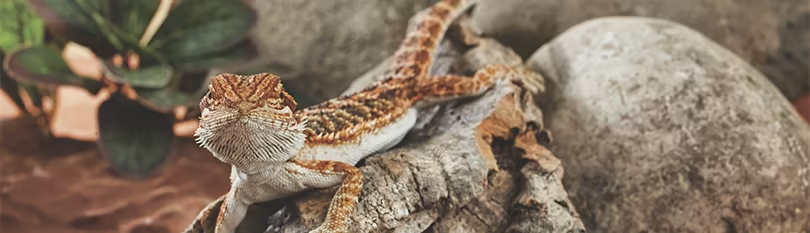
Learn how to setup your reptiles terrarium to ensure your reptile lives a wholesome & happy life. Shop at your local Petco for all reptile terrarium needs.
Updated on July 17th, 2026
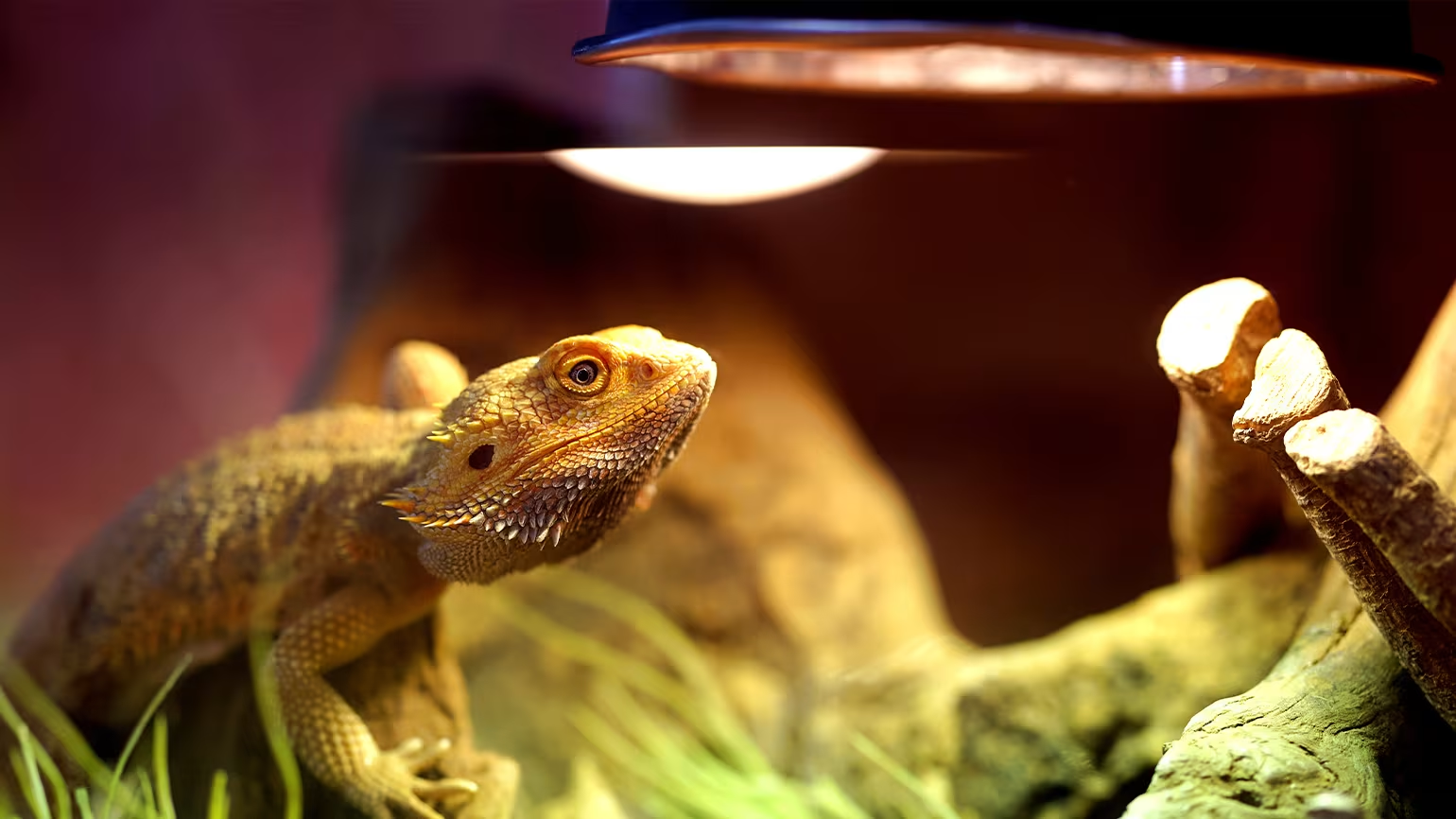
Learn the importance of UVB light for your reptiles and the right reptile lights for your pet’s habitat.
When it comes to reptile habitats, one of the most essential elements to creating a happy home for your pet is including the appropriate type of lighting. Zoo Med helps outline which lights are right for your pet.
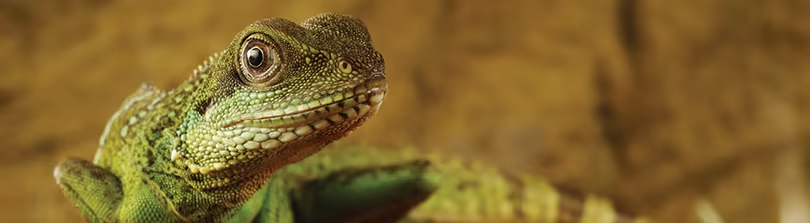
Learn how to care for tropical lizards, recommended diet & habitat setup. Find the right food, supplies & equipment at your neighborhood Petco.
Updated on April 9th, 2026
Learn about live insects for reptile feeding, recommended diet & habitat setup. Find the right food, supplies & equipment at your neighborhood Petco.
Ideally, the UVB light source should run the entire length of the tank. A thermometer/hygrometer should be on each end of the tank to confirm cool and warm sides. Use a digital thermometer to verify temps. Those little ones you have can be inaccurate. Provide a hide on both sides as well. Personally, I would remove the fake grass as it has the potential to cause eye injuries. Your tank looks good otherwise.
Updated on September 24th, 2025
Thanks for your question about Smaug, and thanks for the photo as well! I think that you have a good start to your set up, and that we can tweak a few items. First, your lighting situation appears adequate - I see a UVB light (please change this bulb every 4-6 months), a basking light, and a ceramic heat bulb. I would ensure that your temperatures are appropriate for this species, and that you are monitoring them using digital thermometers (I think that you see both a digital and analog thermometers currently) at the level of Smaug. Analog thermometers are inaccurate, so I don't recommend using them (also, they are high up on the sides of the enclosure, so they wouldn't be giving an accurate temperature read for Smaug). For the cage furniture that you have, I like that you have places for Smaug to climb and hide. However, I would recommend having a hide on both the warm side of the enclosure and the cool side so that Smaug has choices. Same for the climbing structures. I may have missed a food and water dish in the enclosure - I would recommend that both of these be shallow, and be large enough for Smaug's entire body to fit within them. I cannot tell what type of shavings that you have on the bottom of the enclosure, but the only wood shavings that I recommend are aspen shavings. If they are pine, these can be irritating to the respiratory system. I hope that gives you a place to start, and thanks for using Petco Pet Education Center, formerly Petcoach!
You must treat both the environment and the pet. You can try some over the counter products but many can be ineffective if the environment is not treated concurrently. Ivermectin can be dispensed by your veterinarian to use systemically or topically. Do not treat with ivermectin without the advice of your veterinarian as it is quite easy to overdose. A 30 minute soak in a diluted Betadine bath can remove most mites and may soothe irritated skin. Remove the substrate, bag it and take it outdoors. Clean and sanitize the cage, bowls and tank furniture. You can use hot, soapy water followed by a 1:30 dilution of bleach and water followed by a thorough rinsing on the tank, bowls and non porous surfaces. Discard anything that cannot be sanitized. You may need to clean and sanitize the enclosure weekly for several weeks. The pet may need multiple treatments as well.
Use a background to block his view. This may prevent glass surfing or nose rubbing as well as provide more privacy/security. Again, check the temps in his enclosure to make sure it is species appropriate. Offer a variety of crickets, mealworms, dubia roaches, silkworms and wax worms. Gut load prey for 24 hours prior to offering. Dust appropriately with vitamins and minerals regularly. He may also benefit from a soak in a warm 50/50 solution of water and unflavored PediaLyte. If his appetite does not return after adjustments to environment and diet, have him examined by your veterinarian or a vet experienced in treating reptiles. Submit a stool sample to diagnose intestinal parasites or bacterial overgrowth.
Thanks for reaching out about Blu. It sounds as if he is being secretive or scared. Is he housed alone? Is his terrarium in a high traffic area? If yes to either of these, that situation might have to be corrected. Check environmental temperature in the whole exhibit. Good luck.